SHOP NOW, PAY LATER










 Informed Sport
 Informed Choice
 NSF Certified for Sport
 HASTA Certified

Protein powder does not turn dangerous the day its date passes. Most tubs carry a quality-based “best-by” date, not a hard safety cutoff, and manufacturers typically set that window at 12 to 24 months unopened, shrinking to roughly 6 to 12 months once opened. Foodborne risk stays low if the powder was stored properly, but you should still check for spoilage before scooping.
TL;DR:
- The “best-by” date on protein powder indicates quality, not safety, with unopened tubs lasting 12 to 24 months but shorter once opened.
- Fat content, additives, packaging, and desiccant packs significantly influence how long powder remains fresh after opening.
- Spoiled powder mainly shows off smells, clumping, discoloration, mold, or taste changes, and should be discarded if any signs appear.
- Using powder a few months past its date is generally safe if sensory checks are clear, but effectiveness and nutrition decline over time.
- Proper storage in a cool, dark, dry place with sealed lids and small packaging portions extends shelf life and preserves potency.
Table of Contents
- Protein Powder Expiration Explained: Shelf Life, Labels, and What Changes After Opening
- How to Tell if Protein Powder Has Gone Bad
- Is Expired Protein Powder Actually Dangerous, or Just Less Effective?
- Storing Protein Powder So It Actually Lasts
- Using Protein Powder Past Its Date: A Practical Decision Framework
- Picking Fresher Protein Powder When You Shop
- What Most Guides Get Wrong About Protein Powder Expiration
- Where to Buy Protein Powder That Stays Fresh Longer
- Sources
Protein Powder Expiration Explained: Shelf Life, Labels, and What Changes After Opening
The date stamped on your tub reflects stability testing, not a safety cliff. Manufacturers run their formulas through accelerated shelf-life testing to figure out how long the product holds its flavor, texture, and nutrition profile before quality starts to slide. Supplements are not regulated the same way infant formula is, so that printed date is a manufacturer’s quality claim rather than a mandated safety expiration.
Once you break the seal, the clock speeds up. Air, humidity, and light all start working on the powder immediately, and every scoop you dip in introduces a little more moisture and oxygen exposure. That is why an unopened tub might sit fine in your pantry for two years, while the same product opened and used daily starts fading in flavor after six months.
Formulation matters too. Some plant-based powders can be more shelf-stable than dairy-based whey or casein because they carry less fat, and fat is what goes rancid first. Vegan protein blends often lean on pea, rice, or hemp isolates with lower oil content, which slows oxidation. If you’re weighing plant options, it helps to know what separates a well-formulated vegan protein powder from one that will taste stale within months.
Key factors that shift the timeline:
- Fat content: higher-fat blends (some caseins, flavored whey with added oils) oxidize faster than lean isolates.
- Additives: some formulas include preservatives or antioxidants that slow degradation; unflavored, minimally processed powders may degrade differently than heavily flavored ones.
- Packaging: resealable tubs with foil liners hold up better than bags that lose their seal integrity after repeated use.
- Desiccant packs: the small silica packets inside many tubs absorb ambient moisture and meaningfully extend usable life.
How to Tell if Protein Powder Has Gone Bad
Your nose is the first and most reliable tool. A rancid, sour, or chemical-like smell is the clearest sign the fats in the powder have oxidized past the point of enjoyment, and that smell tends to show up before anything looks visibly wrong.
Run through this before you mix your next shake:
- Smell it first. Fresh protein powder smells like its flavor, whether that is vanilla, chocolate, or unflavored and slightly nutty. Anything sour, musty, or chemical is a red flag.
- Check for clumps or hardened chunks. Powder should flow loosely. Solid clumps usually mean moisture got in, which can also invite mold.
- Look for discoloration or visible mold. Dark spots, fuzzy patches, or a color shift from the original shade mean it goes in the trash, no exceptions.
- Test the mixability. Powder that used to blend smoothly but now leaves gritty residue or separates oddly has likely broken down.
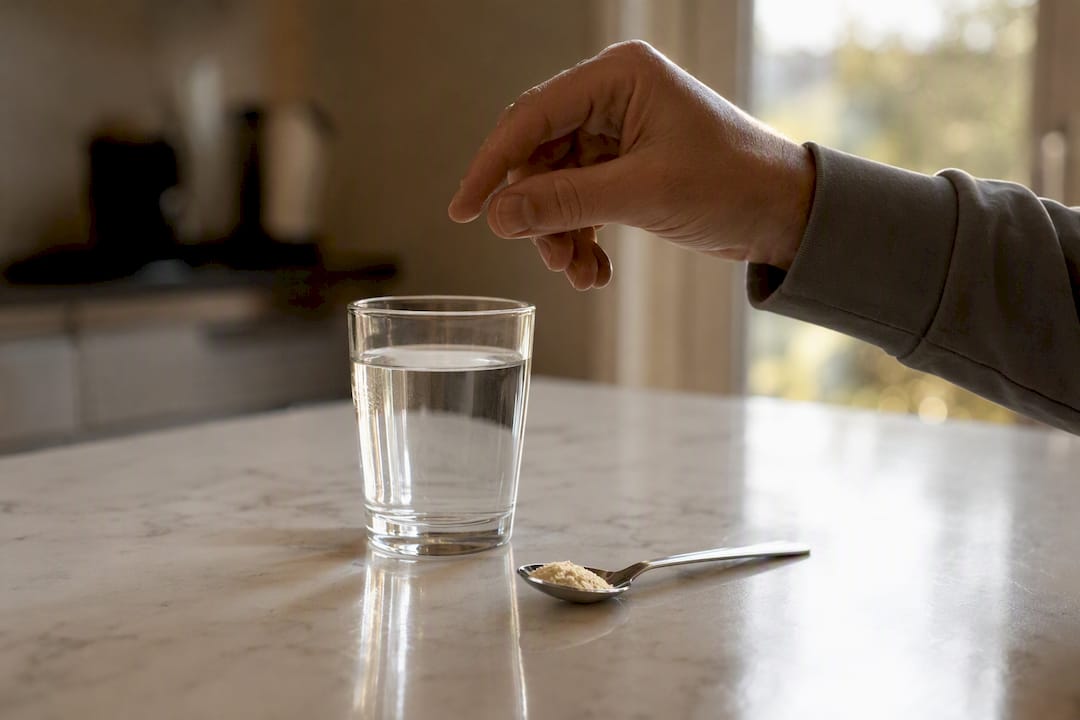
- Taste a small amount mixed with water only, no other ingredients. A flat, cardboard, or bitter taste signals flavor degradation even if it is not unsafe.
If it fails any of the smell, mold, or clump checks, do not proceed to the taste test. Toss it.
Pro Tip: Do the taste test with plain water in a clear glass, not your usual smoothie. Fruit, milk, or ice will mask a subtle off flavor that would otherwise tip you off.
Is Expired Protein Powder Actually Dangerous, or Just Less Effective?
The realistic risk profile splits into two very different categories: microbial safety and nutritional decline. Low-moisture powders rarely support bacterial growth unless moisture gets introduced through a wet scoop, a leaky lid, or storage in a humid room. That is the good news. The less good news is that even a bacteria-free tub can lose nutritional value over time.
Two chemical processes drive most of that decline:
- Oxidation breaks down fats in the powder, producing the rancid smell and off flavors that show up as protein ages, especially in higher-fat blends.
- Maillard browning, the same reaction that browns toast, can selectively degrade lysine and other amino acids, making the protein less nutritionally complete even when nothing looks or smells wrong yet.
Here is the practical distinction worth remembering: a rancid-smelling powder that still gets consumed might cause mild GI upset, nausea, or an unpleasant taste reaction, not a foodborne illness outbreak. A powder that is simply past its date but shows no spoilage signs is more likely to just deliver less usable protein per scoop, not make you sick.
That said, pregnant people, immunocompromised individuals, and anyone with a compromised gut should treat any sensory red flag as a hard stop rather than a judgment call. The margin for “probably fine” shrinks considerably for these groups, and the cost of being wrong is higher.
Storing Protein Powder So It Actually Lasts
Where and how you store your tub matters more than almost anything else in this whole conversation. Heat, humidity, and light are the three enemies, and a surprising number of people keep their protein powder in exactly the wrong spot.
- Store the container in a cool, dry, dark place. A pantry or cupboard beats a spot near the stove.
- Skip the bathroom entirely. Steam from showers is a moisture bomb for powder.
- Keep the lid sealed tight between uses and leave any desiccant packs in place. Pulling them out to “make room” undoes their entire job.
- Use a dry scoop every time. A damp scoop introduces moisture directly into the tub, which is one of the fastest ways to trigger clumping and spoilage.
- If you use protein infrequently, buy smaller pack sizes or single-serve sachets instead of a bulk tub that will sit half-full for a year.
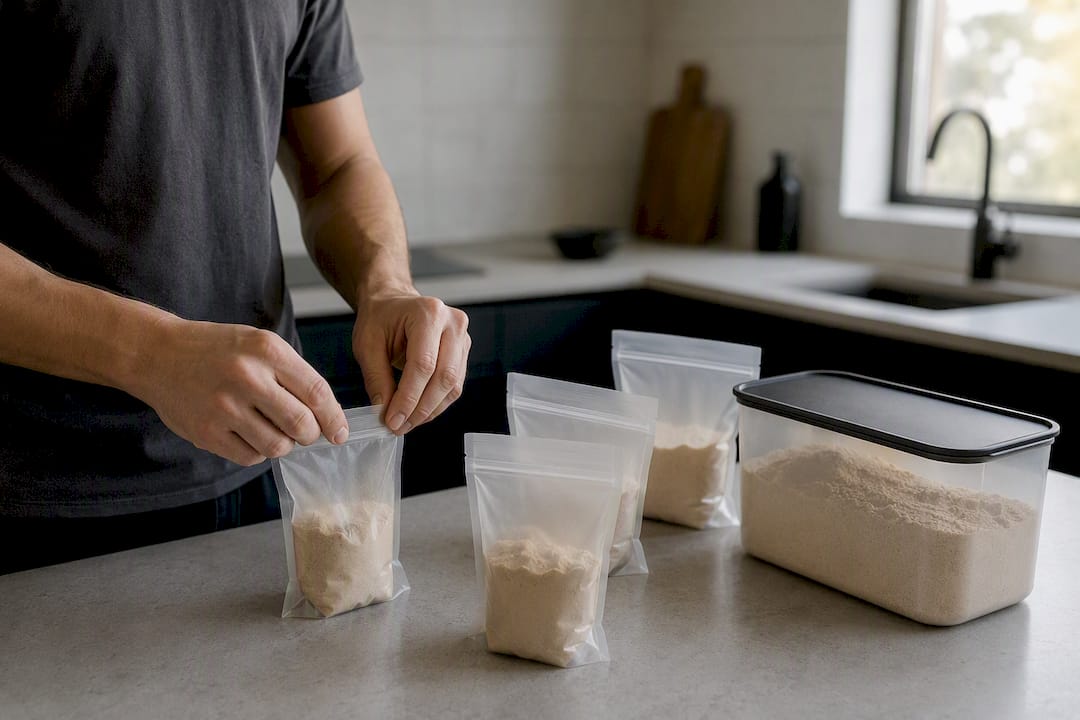
- Transfer opened tubs into a smaller airtight jar as the powder level drops, since less airspace means less oxidation.
Aim for a storage spot that stays consistently below room temperature, ideally around 15 to 21°C, without swinging hot and cold. If your tub gets splashed or exposed to steam by accident, dry the exterior immediately, check the interior for clumping over the next few days, and discard anything that hardens or smells off.
Pro Tip: If you travel with protein powder, portion it into small resealable bags for the trip instead of hauling the whole tub. It cuts down on the number of times the main container gets opened and exposed to new air and humidity.
Using Protein Powder Past Its Date: A Practical Decision Framework
Short-term use past the printed date is generally considered safe as long as storage was solid and none of the sensory red flags show up. Here is how to actually decide:
- Weeks to a few months past date, no spoilage signs: use it. Run the smell and taste check first, then proceed normally.
- Six months to a year past date: expect some flavor and potency loss. Do the full sensory checklist before mixing, and consider it a slightly weaker product rather than a risky one.
- A year or more past date, or any spoilage sign at all: discard it. The nutritional value has likely dropped enough that you’re not getting what you’re paying for, and the odds of an off batch climb.
- If you feel unwell after using older powder: stop immediately, note the symptoms, and don’t finish the tub even if it seems like a fluke.
At a certain point, replacing an old tub costs less than training on suboptimal protein. If your goals depend on consistent amino acid intake, a stale, potency-reduced powder is working against you even when it is technically safe to drink.
Picking Fresher Protein Powder When You Shop
Retailers see this problem from the supply side, and a few habits make a real difference. Check for a manufacture date or batch code when it is listed, not just a best-by date. That code tells you how old the stock actually is rather than just how much runway is left.
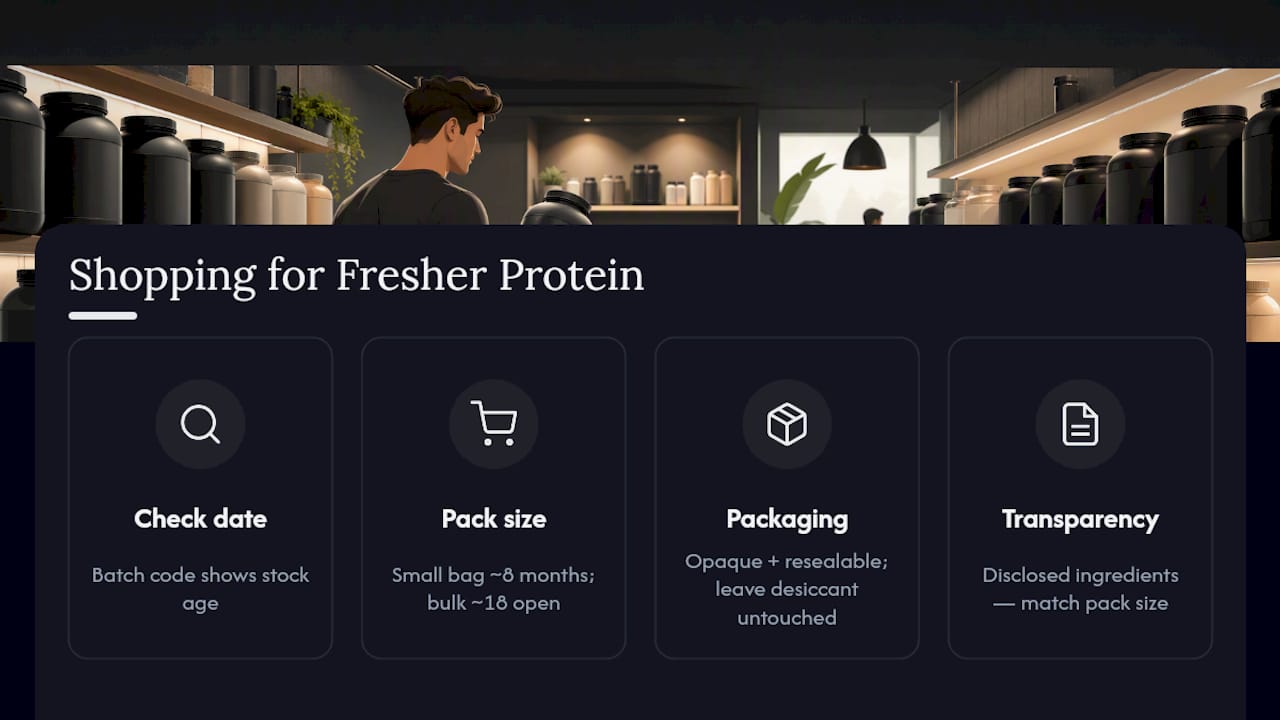
If you go through protein slowly, buy the smaller pack size. A bag that lasts eight months of consistent use beats a bulk tub that sits open for eighteen. Opaque packaging and resealable pouches also help block the light and air exposure that speed up degradation, and leaving factory desiccant packs untouched keeps humidity in check for the life of the product.
Nzsupps works from a curated range of trusted brands with fully disclosed ingredient lists, which means you can see exactly what you’re buying and match pack size to how fast you actually go through it. That transparency matters more than most shoppers realize when freshness is part of what you’re paying for.
What Most Guides Get Wrong About Protein Powder Expiration
Most advice on this topic swings too hard in one direction: either “expiration dates are meaningless, use it forever” or “toss it the day it expires.” Neither holds up against what the science actually shows. The date is a quality marker, and quality decline is real, gradual, and driven by oxidation and Maillard reactions chipping away at flavor and amino acid completeness long before anything becomes unsafe.
Where conventional wisdom falls short is treating this as a binary safety question when it is really a spectrum of diminishing returns. A tub three months past its date with no spoilage signs is not dangerous, but it is also not delivering the same protein punch it did on day one. That distinction gets lost in most consumer advice, which either scares people into wasting good product or lulls them into ignoring genuine spoilage signs.
My take: prioritize storage discipline over date-watching. A well-stored tub with a dry scoop and an intact desiccant pack will outperform a poorly stored tub that is technically still “in date.” Read the sensory signs, not just the label, and buy pack sizes that match how fast you actually go through the product.
Blake
Where to Buy Protein Powder That Stays Fresh Longer
Freshness starts at the point of purchase, not in your pantry. Nzsupps stocks a curated range of protein powders with transparent ingredient listings and pack sizes built for different usage rates, so you’re not stuck choosing between a bulk tub you’ll never finish and paying more per serving for something smaller.
If you go through protein slowly, a smaller option like the 908g beef isolate in Tropical Orange Mango keeps your opened-container window shorter than a multi-kilo bag. For those training consistently and burning through protein faster, the 2.27kg chocolate isolate offers better value per serve without the powder sitting open for a year. Either way, check the batch information listed on the product page, store it the way this guide outlines, and you’ll get full potency out of every scoop. Browse the full range at Nzsupps to find the pack size that matches your training pace.
This article is general information, not a substitute for advice from a qualified doctor. Consult a qualified healthcare professional about your own circumstances before acting on anything here.
Sources
- Does Protein Powder Expire? Shelf Life, Storage, and Bad Signs
- Does Protein Powder Expire?
- PMC article relevant to food stability and oxidative degradation