SHOP NOW, PAY LATER












 Informed Sport
 Informed Choice
 NSF Certified for Sport
 HASTA Certified

Betaine is one of those pre-workout ingredients that never gets its own hype reel. No tingles, no crawling-skin rush, no neon colour change in the shaker. But if you have been grinding for an extra rep or two on your heavy sets, betaine anhydrous is quietly pulling more weight for your strength and power than half the flashy stuff printed on the tub. Here is what it actually does, the real benefits, and the dose that makes it worth a spot in your scoop.
What betaine anhydrous actually is
Betaine (also called trimethylglycine, or TMG) is a compound your body already makes and that you eat every day in foods like beetroot, spinach and wholegrains. In a pre-workout it turns up as betaine anhydrous, which is just the dry, concentrated form. It is not a stimulant and it will not light you up. It works in the background on two jobs your muscles quietly care about: keeping cells hydrated, and handing out methyl groups.
Benefit 1: it hydrates your cells from the inside
Betaine is what is called an osmolyte. In plain English, it pulls water into your muscle cells and helps them hold onto it. Picture a well-watered cell as a firmer, more resilient balloon. It copes with the stress of a hard set better and keeps its shape when things get hot and sweaty.
That cell hydration supports performance under fatigue, so the back-half reps do not fall off a cliff, and it is part of why betaine sits so well next to pump ingredients. If you want the full story on blood flow and the pump, that is the job of citrulline. Betaine handles the water inside the cell; citrulline handles the flow around it.
Benefit 2: it is a methyl donor (the creatine connection)
The second job is where the strength and power talk comes from. Betaine is a methyl donor, meaning it hands off small chemical tags called methyl groups that your body uses for a stack of background processes. One of those processes is helping produce creatine, the fuel your muscles lean on for short, explosive effort.
By chipping in methyl groups, betaine takes some load off that system, which is one of the proposed reasons it has been linked to better power output and training volume. It is not a replacement for creatine. If raw strength is the goal, creatine monohydrate is still the main event. But betaine looks like a genuinely useful support act.
What that actually means in the gym
Let me keep it honest. Betaine is not going to add 20kg to your bench overnight, and anyone telling you that is selling something. What the research points to is smaller, real-world stuff:
- A little more power and force on explosive lifts
- A few extra quality reps before the tank hits empty
- Body-composition signals across a training block, since more work done tends to mean more to show for it
Trials using around 2.5g a day have reported modest gains in strength and power when people train consistently. The effect builds with daily use rather than from one big scoop, so treat it as a keep-taking-it ingredient, not a hit-it-before-a-PB one.
The dose that matters: 2.5g a day
This is the easy part. The dose that has actually been studied is 2.5g (2500mg) of betaine per day, and the better pre-workouts hit exactly that. When I am scanning a label, a full 2500mg of betaine is a green flag that the formula was built to do a job, not just look busy.
A few tubs we stock at NZ Supps that land on the full 2.5g: Ryse Godzilla Ryse Godzilla Pre-Workout$113.45Shop → packs the studied 2500mg, and so does Ghost Legend All Out
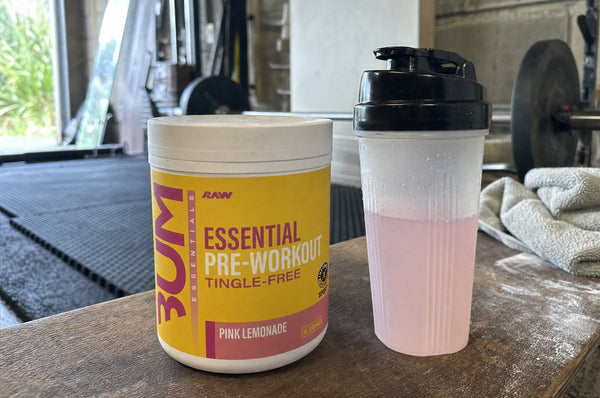
 Ghost Legend All Out Pre-Workout$90.00Shop →. Want the same dose in a different flavour lane? RAW Essential Performance and Ghost Legend V4 both carry 2500mg of betaine too.
Is betaine safe?
Short version: yes, for the vast majority of people it is very well tolerated. It is a compound you already eat, and at 2.5g the most anyone usually notices is a bit of stomach upset if they take it on an empty gut. Easy fix, take it with your pre-workout and plenty of water. If you are weighing up pre-workout in general, we wrote a straight-up guide on whether pre-workout is dangerous that is worth a read first.
How to stack betaine
Betaine plays nicest as part of a performance stack rather than a solo act:
- With citrulline for the pump: water inside the cell, blood flow around it. Here is how citrulline works.
- With beta-alanine for endurance: betaine helps the explosive reps while beta-alanine buffers the burn on the longer sets.
- With creatine for raw strength: the two share that methylation link and cover the short, powerful efforts between them.
Most decent pre-workouts already blend the first few for you. If you want the quick reference on what every ingredient does and the doses to look for, bookmark the pre-workout cheat sheet.
Where to find a proper betaine dose
You do not need to overthink this. Pick a pre-workout that lists a real 2500mg of betaine, take it daily, and give it a few weeks to show up in your numbers. You can compare betaine-dosed pre-workouts side by side or just browse the full pre-workout range and lean toward the formulas that actually spell out their doses.
Still got questions before you commit? We answer the common ones in the pre-workout questions answered hub.
Betaine FAQ
Does betaine actually build strength?
On its own it is a support ingredient, not a miracle. Research using about 2.5g a day has linked betaine to small but real improvements in power output and training volume when you train consistently. Treat it as one honest contributor to a good formula, not the whole story.
How much betaine should a pre-workout have?
2.5g (2500mg) per serve is the dose that has actually been studied, and it is what the better tubs use. Much less than that and you are mostly getting label decoration.
Is betaine the same as beta-alanine?
No, and it is an easy mix-up. Beta-alanine buffers acid to delay fatigue on longer sets and gives you the tingles. Betaine is a cell hydrator and methyl donor aimed at strength and power, with no tingle at all.
Can I take betaine every day?
Yes, and daily is how it works best, because the benefits build across a training block rather than from a single dose. Take it with food or your pre-workout and plenty of water to keep it easy on the stomach.