SHOP NOW, PAY LATER










 Informed Sport
 Informed Choice
 NSF Certified for Sport
 HASTA Certified

If you’ve ever hit the last rep of a set and watched your arms swell up like they belong to someone bigger, you’ve felt the pump. Most of the time the ingredient doing that work is citrulline, and the citrulline pump is one of the few things in a pre-workout you can actually see and feel inside the hour. It’s real, it’s dose-dependent, and once you understand how it works you’ll stop paying for tubs that sprinkle in a token amount.
So here’s the honest breakdown: what citrulline does inside you, why “malate” and “pure” aren’t the same thing on a label, the dose that actually delivers, and which pre-workouts we stock that hit it.
What citrulline actually does for your pump
L-citrulline is an amino acid. You swallow it, and your kidneys convert a big chunk of it into L-arginine. Arginine is the raw material your body uses to make nitric oxide.
Here’s the part that surprises people. Taking citrulline raises your blood arginine levels more reliably than taking arginine straight up. Plain arginine gets chewed up in your gut and liver before much of it reaches your bloodstream, so citrulline is actually the smarter way to get arginine where you want it.
Once nitric oxide climbs, it signals the smooth muscle lining your blood vessels to relax. The vessels widen, more blood and plasma flood into the working muscle, and that fullness and vascularity is the pump you see in the mirror. More blood flow also means more oxygen and nutrients reaching the muscle while you train, which is the performance side of the story, not just the look.
There’s a second job worth knowing about. Citrulline is part of the urea cycle, the system that clears ammonia. Ammonia builds up as you grind through reps and adds to that heavy, gassed-out feeling near the end of a hard set. Helping shift it is why plenty of lifters report a bit less fatigue, and sometimes less next-day soreness, on a properly dosed citrulline.
Citrulline malate vs pure L-citrulline (read the label)
This one trips up nearly everyone. Two tubs can both say “citrulline” on the front and hand you very different amounts of the active.
- Pure L-citrulline is just the amino acid. The number on the label is the citrulline you’re getting.
- Citrulline malate is L-citrulline bonded to malic acid (malate), a compound your body uses in energy production. It’s usually sold at a 2:1 ratio, meaning two parts citrulline to one part malate.
So if a label says “6g citrulline malate 2:1,” roughly 4g of that is actual citrulline and the balance is malate. Same word on the tub, less of the pump-driving active. That’s not a scam, malate has its own role in energy metabolism, but you need to know which form you’re buying so you can compare tubs honestly instead of by the biggest number.
The dose that actually gives you a pump
The dose that carries the research sits around 6 to 8g of citrulline per serve. Get into that zone and you’ll feel it. Drop under about 3g and you’re mostly paying for a label decoration, enough to print “citrulline” on the front without funding a dose that does anything.
Take it 30 to 45 minutes before you train so the arginine and nitric oxide have time to climb. Citrulline sits happily alongside caffeine, which is why most stim pre-workouts already build a pump dose in rather than making you buy it separately.
Pre-workouts we stock that hit a real citrulline dose
These are the tubs on our shelves carrying a proper per-serve dose, taken straight off the label:
-
MusclePharm Wreckage
 MusclePharm Pro Series WreckageCheck latest price Shop →, 8g of citrulline per serve, one of the biggest doses we stock, paired with a serious pump-and-stim hit.
 - CBUM Thupper, also 8g, built as a dedicated pump-and-performance formula.
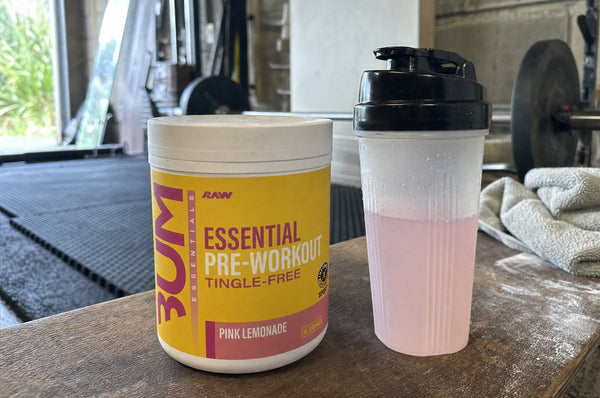
- RAW Essential Performance, 6g, inside a clean, fully-disclosed label.
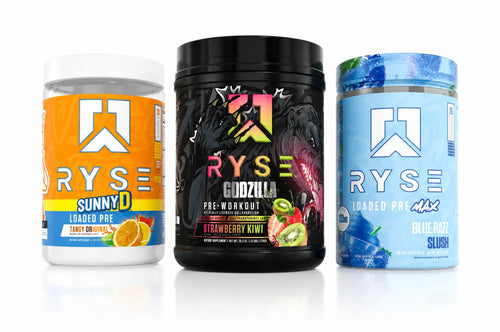
- Ryse Loaded Pre Max, 6g, on the pump-forward side of the Ryse lineup.
-
Nexus AMP3D
 Nexus AMP3DCheck latest price Shop →, 6g, a pump-focused pick if you want the blood flow without a huge stim load.
Want to line a few up side by side on dose and price before you commit? Compare the pump pre-workouts we stock, or browse the full Pump Formulas and Strong Pump ranges.
Is citrulline safe?
Short version: yes, it’s one of the best-tolerated ingredients in the entire pre-workout aisle. The only real gripe at high doses is mild stomach upset for a small number of people, and that usually sorts itself with a bit of water and food. I’ve put the full rundown in Is Citrulline Safe? if you want the detail before you load up.
Stack it for an even bigger pump
Citrulline plays well with the other pump ingredients, and running them together beats any one on its own. Glycerol pulls extra water into the muscle for a fuller, longer-lasting pump, so it’s the natural partner to citrulline’s blood flow. Betaine works as a cellular osmolyte and supports power output, which is why you’ll often find all three sitting in the same serious pump formula. If a tub carries a real dose of citrulline plus one or both of those, that’s your pump stack sorted.
The bottom line
Citrulline is the closest thing to a reliable pump you’ll find in a pre-workout, as long as it’s dosed at 6 to 8g and not just there for the label. Check the number, check whether it’s malate or pure, and pick a tub that actually delivers.
New to all this? Start with the pre-workout cheat sheet for the plain-English rundown on every ingredient, get the honest safety picture in Is Pre-Workout Dangerous?, and skim the pre-workout questions answered hub for quick answers to the stuff everyone asks.