SHOP NOW, PAY LATER









 Informed Sport
 Informed Choice
 NSF Certified for Sport
 HASTA Certified

By NZ Supps Team
Dairy-free and lactose-free answer different questions. Dairy-free concerns milk ingredients. Lactose-free concerns lactose, the sugar in milk. A lactose-free protein powder can still contain milk protein, so those words are not interchangeable when you choose a shake.
Start with what you need to avoid, then read the exact flavour's label. A front-of-pack claim, a plant-based filter and a friend's recommendation each give you less information than the ingredients and allergen statement together.
The short answer
- If you avoid milk ingredients, look beyond lactose. Whey and casein both come from milk.
- If lactose is the issue, a milk-derived product may still be an option if its lactose information and your tolerance fit.
- If you have a milk allergy, a lactose-free claim does not make milk protein suitable. Follow your allergy management advice.
The useful distinction is the ingredient you are avoiding, not whether the drink looks creamy.
When the two labels lead to different choices
Picture two shoppers looking at the same tub. One wants to avoid lactose but eats other milk products comfortably. The other needs to avoid milk protein. They cannot use the same shortcut.
The NIDDK explanation of lactose intolerance distinguishes problems digesting lactose from milk allergy, which involves the immune system. It also notes that lactose tolerance differs between people. That does not identify the cause of symptoms after a particular shake; it explains why the distinction matters.
For a buying guide aimed specifically at lactose, use our protein powder for lactose intolerance guide. This article is about understanding the claims before you build that shortlist.
| Label or ingredient | What it tells you | What it does not establish |
|---|---|---|
| Lactose-free | A claim about lactose in the product | Absence of milk protein |
| Whey or casein | The formula uses milk-derived protein | The amount of lactose in the finished flavour |
| Dairy-free | A claim about avoiding dairy | Suitability for every person's allergy requirements |
| Vegan | The product is presented as avoiding animal ingredients | A guarantee against manufacturing cross-contact |
| Clear whey | A style of whey drink | A plant origin or absence of milk |
When you see whey isolate or clear whey
The words isolate and clear can sound like the milk has disappeared. They do not change the protein's origin. Start by identifying whey in the ingredient list, then look for the product's specific lactose information if that is relevant to you.
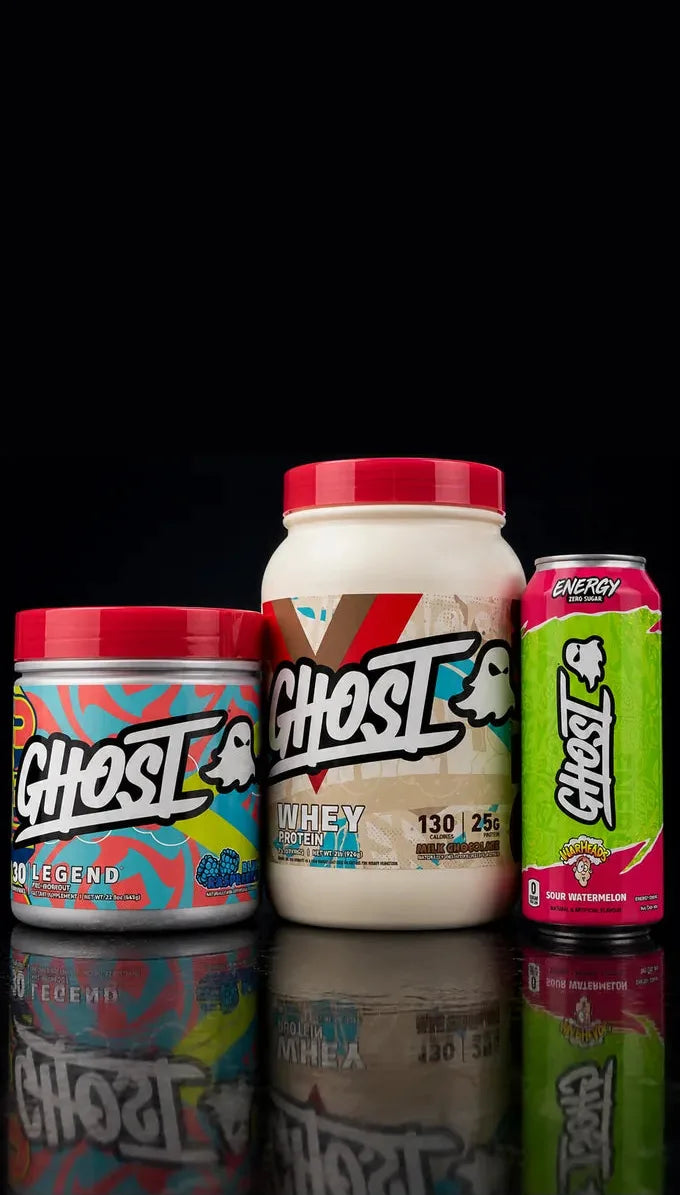
A real catalogue example is Ghost Clear Whey Isolate, Blue Raspberry. The product is whey isolate even though it makes a juice-style drink. Its appearance is not an allergy assessment, and the word clear is not a lactose measurement.
Do not fill a missing number with an estimate borrowed from another brand. Two products can share a protein category without having the same finished formula. Ask for the current pack information when an online panel is incomplete, especially if a flavour has changed.
Nor does a low total-sugars figure answer every question. The nutrition panel is useful, but it has a different job from the ingredient and allergen panels. Read the part of the label that addresses the substance you are avoiding.
When you see plant-based or vegan
A plant protein source is a sensible starting point for someone avoiding dairy ingredients. It is still only the starting point. Read through the flavour ingredients and check the separate allergen information before deciding whether the finished powder fits your requirements.
For example, the name Ghost Vegan Protein, Peanut Butter Cereal Milk includes the words cereal milk as part of its flavour name. That alone does not tell you whether milk is an ingredient. Equally, an almond or peanut product name does not establish that a formula contains no other allergens.
This is why a flavour name is a poor tool for exclusions. It describes the experience the manufacturer is selling; the back panel describes what goes into it. Our vegan protein buying guide covers the broader protein and value checks once dietary fit is settled.
Read the label in three separate passes
First, read the ingredient list. Look for the protein source and anything else relevant to your dietary requirements. Do this for the exact flavour and pack you intend to buy, rather than another product in the same range.
Second, read the allergen summary. Third, read any precautionary statement. Food Standards Australia New Zealand explains the distinction between declared allergens and voluntary statements about possible unintended presence during manufacture. A missing precautionary statement is not a personalised safety guarantee.
Keep those passes separate when you ask a retailer a question. "Does this contain milk as an ingredient?" and "What is the current manufacturer's advice about milk cross-contact?" are different questions. A useful answer should say which one it addresses.
If the page and the bag disagree, stop and clarify the discrepancy before using the product. Packaging changes, old photos and revised recipes can create confusion. A photograph of the current ingredients, allergen statement and batch details gives the supplier something specific to check.
Check the mixer and the rest of the recipe
Your finished shake contains more than the powder. Write down the liquid, yoghurt, flavour additions and any other ingredients before calling the drink dairy-free or lactose-free. Water does not remove anything already present in the powder.
For a practical check, put the powder label and mixer label side by side. Identify the relevant ingredient or claim on each. Repeat the process for anything added with a spoon, even if that ingredient is a small part of the recipe.
This also helps in a shared kitchen. Keep the original packaging available rather than storing every powder in an identical unlabelled jar. If avoiding an allergen, use the food-preparation precautions in your allergy plan; choosing a different powder does not settle how it is prepared.
A note to keep on your phone
Before ordering, record the exact product and flavour, the reason you are avoiding an ingredient, and the wording you need confirmed. Add a photo of the current label when the product arrives. This makes a repeat order easier to check instead of relying on memory.
You do not need to rank every protein powder in the shop. Eliminate options that do not meet your requirements first. Then compare serving size, taste preferences and cost among the remaining choices. Dietary fit comes before a discount.
FAQ
Is lactose-free protein always dairy-free?
No. Lactose-free refers to lactose, while whey and casein are milk proteins. Read both the protein source and allergen information.
Does clear whey count as plant protein?
No. Clear whey is a whey drink and therefore uses milk-derived protein. Its light appearance does not change that origin.
Can a vegan flavour have milk in its name?
A flavour name can describe a taste rather than its ingredient source. Check the actual ingredients and allergen statement instead of making a decision from the flavour name.
Does water make my whey shake dairy-free?
No. It changes the mixer but does not remove the powder's milk-derived protein. Assess the powder and the mixer separately.
Can I check a different flavour in the same range?
Use the exact flavour's current information. Flavour components and precautionary statements can differ, and manufacturers can update formulas.
What if the online information is incomplete?
Ask for a current label photograph and clarification from the supplier. For a milk allergy, do not use an incomplete product page as evidence that a powder fits your allergy plan.
Sources
NIDDK: lactose intolerance definitions; FSANZ: allergen labelling. Catalogue examples checked 21 September 2026; use current packaging for product decisions.