SHOP NOW, PAY LATER











 Informed Sport
 Informed Choice
 NSF Certified for Sport
 HASTA Certified

Does the biggest protein number on a vanilla tub make it the better buy? For most shoppers, start with whey concentrate for a daily shake, whey isolate when you want less lactose but still dairy, or a plant blend when you avoid milk, then choose by the label and cost rather than the flavour name.
Browse protein powder NZ to build a shortlist, but confirm the vanilla variant before buying. Searching for protein powder vanilla gets you a flavour category, not a guarantee of protein content, sweetness or batch certification.
Table of Contents
- Vanilla Protein Types and Who Should Buy Each
- Label Checks That Make Serves Comparable
- How Vanilla Tastes and Mixes in a Shaker
- Sweeteners and What Else Is in the Scoop
- Price per Serve on Real Vanilla Tubs
- Choose a Tub and Confirm the Batch
Vanilla Protein Types and Who Should Buy Each
Choose the protein type before choosing the vanilla flavour. A creamy whey concentrate and an earthy plant blend can both say vanilla on the front, yet make quite different drinks.
The comparison below describes buying tendencies, not guaranteed specifications. Finished powders include flavouring and other ingredients, so use the individual tub's nutrition panel rather than a raw ingredient specification.
Vanilla protein types compared
| Type | Protein per 100 g | Milk, lactose or soy | Vanilla mix and taste | Price per serve |
|---|---|---|---|---|
| Whey concentrate | Use the finished powder's nutrition panel | Milk, some lactose | Smooth, mild vanilla in water or milk | Usually lowest within a comparable range |
| Whey isolate | Check the finished formula, not the isolate ingredient claim | Milk, usually less lactose; verify the label | Cleaner vanilla, thinner mix | Often mid to high |
| Whey hydrolysate | Check the protein base and finished panel | Milk; peptides can taste bitter | Vanilla can soften a sharp finish; often mixes thin | Usually highest within a comparable range |
| Plant blend, including pea, rice or soy | Read the declared amount for the complete blend | Soy only if used; check the contains statement | Thicker, sometimes earthy; needs thorough shaking | Often mid-range |
These price positions aren't a substitute for a current price calculation. A discounted isolate can undercut a concentrate, while a small plant tub can cost more per drink than its shelf price suggests.
A daily shake without extra complication
Whey concentrate is the sensible starting point if you use dairy and want a familiar, milky drink. It generally suits a straightforward shaker routine without paying specifically for additional processing.
Choose a mild vanilla if the powder will also go into oats, yoghurt or smoothies. A strongly sweet ice-cream flavour might suit a drink on its own but dominate everything else you mix it with.
Concentrate isn't automatically the right choice because it's cheaper. If you dislike its finished texture or need a different lactose profile, a tub you won't drink isn't useful value.
Less lactose while keeping whey
Whey isolate is the more logical shortlist when you want a dairy protein with less lactose. Check the brand's actual lactose information rather than treating isolate as a promise of lactose-free powder.
Isolate is still milk-derived. It isn't the dairy-free alternative to concentrate, and the word isolate doesn't remove the need to read the allergen declaration.
The practical differences between these options are unpacked in the whey isolate versus concentrate guide. Choose the processing type for a reason you can name, rather than assuming the more expensive tub must suit you better.
No dairy or a preference for plant ingredients
Choose a clearly labelled plant blend when avoiding dairy is the priority. Look for the actual protein ingredients, such as pea, rice or soy, rather than relying on a leafy design or a vanilla flavour description.
A plant blend is also a texture choice. If you dislike a thick drink, start with a small pack where available rather than committing to a large tub on the strength of its flavour name.
- Daily shake in water or milk: Start with whey concentrate if dairy suits your preferences.
- Less lactose, still dairy: Shortlist whey isolate with clear lactose information.
- No dairy: Choose a plant formula with an appropriate allergen declaration.
- Dislike a bitter finish: Don't pay for hydrolysate just to get vanilla.
Hydrolysate makes sense when you specifically want hydrolysed whey and accept the taste and price trade-off. Hydrolysed describes processing, not a guarantee that the drink will taste smoother.
Buy the protein type you want to drink. Don't use stronger vanilla flavouring to compensate for a base you already dislike.
Keep the purchase separate from organising your training. If you need a structured routine, you can find your strength training plan through GrabGains, then choose a powder around your ordinary food and shopping preferences.
Label Checks That Make Serves Comparable
Compare protein by powder weight, not just by scoop. A larger protein claim per serve may come from a larger serve.
The Ministry for Primary Industries retail labelling guide identifies amount per serving, amount per 100 g, serving size and servings per package as nutrition details to check. For vanilla protein, these figures make different tubs easier to compare on equal terms.
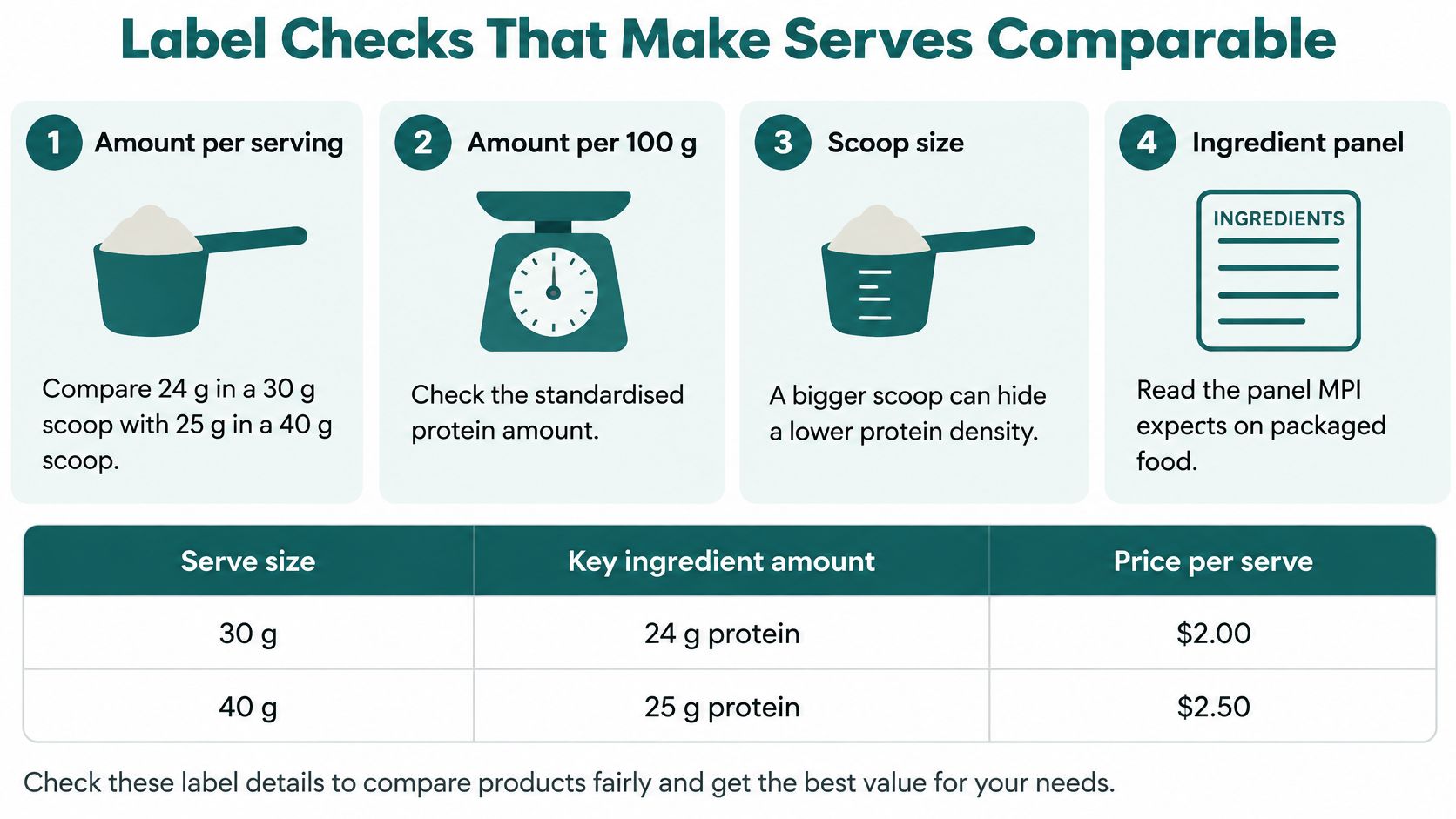
Put both tubs on the same basis
Here is an illustrative comparison using sample label values, not named products or current offers:
| Example tub | Serve size | Protein per serve | Protein per 100 g | Price per serve |
|---|---|---|---|---|
| Tub A | 30 g | 24 g | 80 g | Tub price divided by declared servings |
| Tub B | 40 g | 25 g | 62.5 g | Tub price divided by declared servings |
Divide protein per serve by serve weight, then multiply by 100. Tub A provides 80 g protein per 100 g of powder; Tub B provides 62.5 g. Tub B has more protein in its stated serve, but Tub A is more protein-dense.
Price per serve needs the tub price and the number of declared servings. Divide the price by servings to compare cost on the same basis. Protein density helps show what is in the powder; it does not decide whether the flavour, allergens or price suit you.
Record the details before calculating value
Use this label check before comparing front-panel claims:
- Protein and serve weight: Record both figures together.
- Protein per 100 g: Use the standardised value to compare concentration.
- Servings per pack: Check the declared count against the serving weight.
- Ingredients and directions: Note the protein source, other ingredients, and storage or use instructions.
- Allergens and sweeteners: Check the declarations and identify the sweetener type before choosing.
Ingredient order generally runs from greatest to smallest ingoing weight. Whey or pea listed first indicates a different formula from one led by carbohydrate ingredients, but the list does not give the exact amount of each ingredient.
Check that the packaging is readable, includes relevant New Zealand or Australian business details, and states the net weight. Store the powder according to its directions, away from steam and moisture.
The protein per scoop and serving sizes guide explains why a scoop is not necessarily the same as the declared serving weight. Use a kitchen scale if your scoops vary.
Photograph the lot or batch code, then record protein per serve, protein per 100 g, serve weight and servings per pack. For a fair vanilla comparison, include allergens, sweetener type and price per serve as well.
How Vanilla Tastes and Mixes in a Shaker
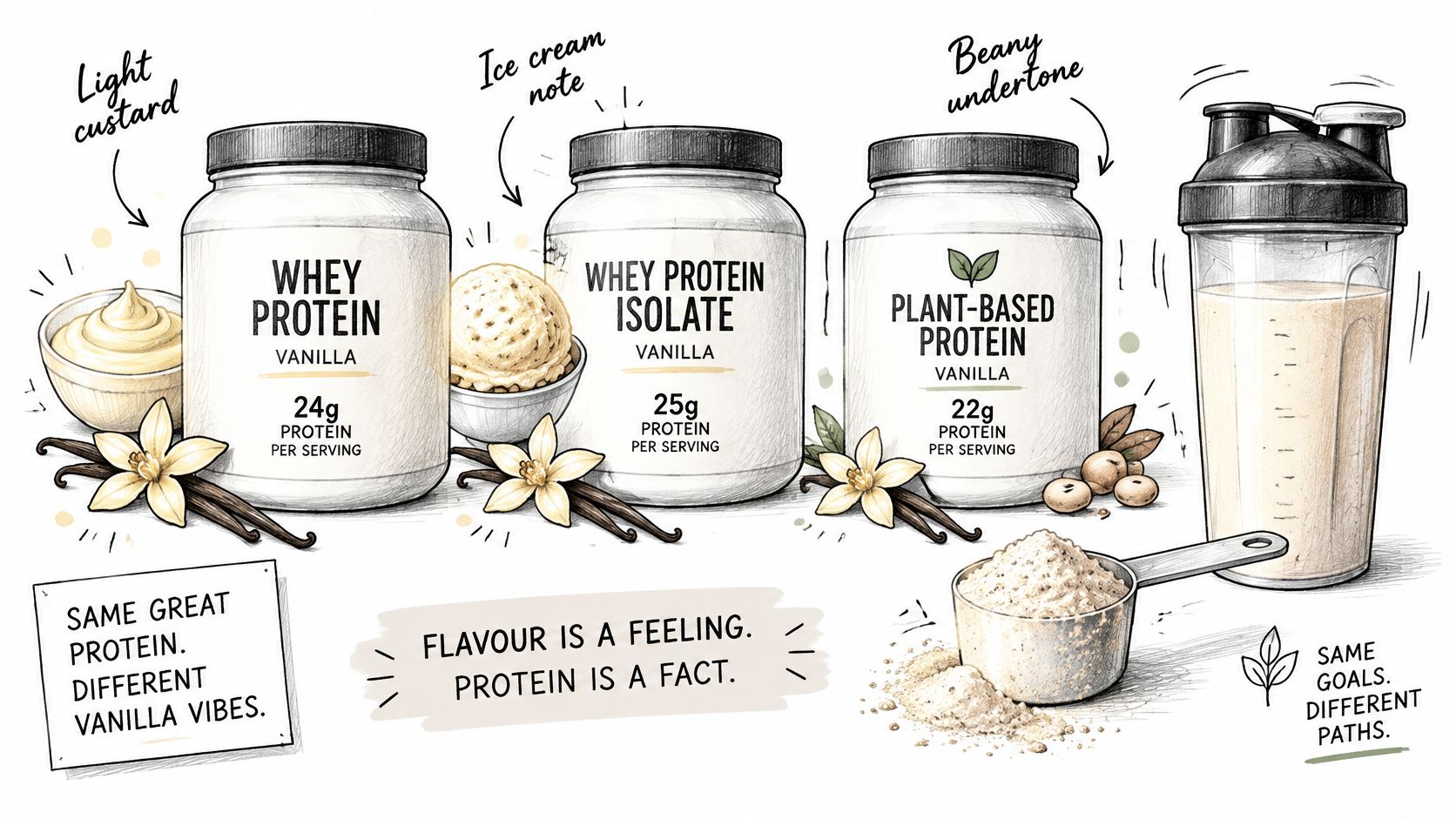
Vanilla can mean light custard, sweet ice cream or a faint flavour over a noticeable protein base. The flavour name alone won't tell you which drink you're getting.
Concentrate often tastes fuller and milkier. Isolate commonly makes a lighter drink, while plant formulas can retain a pea-like or earthy finish despite generous vanilla flavouring.
Test the powder in water first
Use cold water for your first drink. It makes it easier to judge the powder's own sweetness, aftertaste and texture without milk softening the result.
Start with the liquid quantity printed on the tub, adding liquid before powder. Shake firmly, let the drink settle briefly, then shake again if dry pockets remain.
Milk adds body and changes the flavour balance. That's useful if you want a milkshake-style drink, but judge it as a different preparation rather than proof that the powder mixes well in water.
- Too thick: Add more liquid in small amounts and shake again.
- Powder stuck underneath: Put liquid in first and loosen the residue before reshaking.
- Foamy after shaking: Let it settle rather than adding more powder.
- Persistent graininess: Try a shaker ball or grid, but recognise that some formulas retain texture.
A damp shaker can make powder stick before you've added the liquid. Wash it properly, dry it between uses and check under the lid seal, where residue can collect.
Know what a shaker can fix
Lecithin helps powder disperse. It isn't extra protein, and its presence doesn't guarantee a perfectly smooth drink.
Plant powders can remain slightly sandy even after thorough shaking. A blender can improve the drinking texture, but it can't remove an earthy flavour you don't enjoy.
Hydrolysed whey can have a sharper or bitter finish. Extra sweetness may soften that impression, but it won't necessarily make it taste like a mild concentrate.
If a vanilla powder only tastes good in milk, include the milk in your buying decision.
Keep your first test simple. Adding fruit, yoghurt, nut butter and flavour drops immediately makes it harder to work out whether you like the powder itself.
For oats or smoothies, a restrained vanilla is often easier to use. For a straight shake, a sweeter formula may be exactly what you want.
Sweeteners and What Else Is in the Scoop
The sweetener line is a useful buying filter. Plain vanilla leaves an aftertaste more exposed than a heavily flavoured chocolate or fruit drink.
Sucralose usually gives a direct, sustained sweetness. Stevia can leave a lingering herbal or liquorice-like finish, while monk fruit can also leave an aftertaste that some drinkers notice more than others.
Match the sweetness to how you use it
Neither a plant-derived sweetener nor a familiar artificial sweetener guarantees a better-tasting shake. Read the actual combination because brands may blend sweeteners to change the finish.
Sugar adds sweetness and carbohydrate. Maltodextrin is a carbohydrate ingredient rather than an interchangeable substitute for an intense sweetener, so check the carbohydrate panel instead of judging by how sweet the drink tastes.
The sucralose versus stevia guide is useful if you've narrowed your choice to those sweeteners. Pick around the taste you prefer, not the most reassuring wording on the front.
- For drinking straight: A sweeter vanilla may suit a simple water-based shake.
- For mixing into food: A milder formula gives you more control over the finished flavour.
- For a thicker texture: Look for gums such as xanthan or guar.
- For a simpler drink: Choose a shorter ingredient list because you prefer it, not because it proves better quality.
Gums add body, particularly in lighter whey formulas and plant blends. They don't increase the protein amount, and more thickness doesn't mean more protein.
Some formulas include digestive enzymes. Their presence isn't a reason to ignore the milk declaration or assume a particular lactose content.
Use the allergen statement as the dietary filter
The MPI allergen labelling guidance says milk and soy must be declared when present through ingredients, compound ingredients, additives or processing aids, subject to relevant exemptions, with allergens identified in the ingredients list and a separate contains statement.
Read both places. Whey is milk-derived, while a plant formula may contain soy or have other allergen information you need to consider.
A precautionary statement about possible cross-contact isn't the same as an ingredient declaration. If your requirements are strict and the label leaves a question unanswered, ask for clarification before ordering.
Vanilla flavour, natural vanilla and vanilla extract describe flavour ingredients, not the entire product. None establishes that a tub is dairy-free, soy-free, locally sourced or stronger tasting.
The current label on the exact flavour is the useful reference. Don't assume another flavour from the same range has an identical ingredient or allergen profile.
Price per Serve on Real Vanilla Tubs
How much does a vanilla tub cost for the protein you get? Compare the price per serve, then check protein per 100 g so different scoop sizes don't distort the comparison.
Compare typical vanilla tub categories
The figures below are worked examples, not prices for specific products. They show how to calculate value from a tub's price and its declared servings.
| Vanilla tub category | Example tub price | Example servings | Price per serve |
|---|---|---|---|
| Whey concentrate | $70 | 30 | $2.33 |
| Whey isolate | $90 | 30 | $3.00 |
| Plant or hydrolysate | $80 | 30 | $2.67 |
Divide the tub price by the number of servings. For example, $70 ÷ 30 servings is about $2.33 per serve. The actual cost depends on the selected vanilla product, pack size and current price.
Calculate the cost of the protein
A serve price alone can favour a larger scoop that provides more powder, not necessarily more protein. Divide the price per serve by the grams of protein in that serve to calculate cost per gram of protein. For a fair comparison, check protein per 100 g as well.
For example, if a $70 tub has 30 servings and each serving contains 24 g of protein, each serve costs about $2.33, or roughly 9.7 cents per gram of protein. Use the vanilla variant's own nutrition panel and serving declaration; another flavour may have different serving details.
- Check the variant: Compare the exact vanilla product and pack size.
- Use the same basis: Compare cost per serve and cost per gram of protein.
- Check the blend: A blend name alone does not show the proportion of each protein.
- Include your preparation: Add the cost of milk if you use it to make the shake.
A lower tub price can still mean a higher cost per drink if the pack contains fewer servings. A higher price may suit you if the formula matches your preferences, but compare the protein and serving figures before paying extra for a product type.
The MPI supplemented-food guidance explains that supplemented foods must meet most general Food Standards Code requirements and be identified as supplemented food.
Check the product's regulatory description rather than assuming every powder has identical oversight. Clear business details and complete labelling are more useful than vague premium claims.
Pay an isolate premium only if its formula characteristics matter to you and are clear on the label.
Choose a Tub and Confirm the Batch
A suitable vanilla powder still needs a clear verification trail if you compete in drug-tested sport. Confirm the exact product and batch before you use it, and keep a record of the tub you bought.
Separate the label from the certificate
Medsafe's dietary supplement guidance explains that dietary supplements generally don't undergo pre-market approval in New Zealand. The sponsor remains responsible for safety, quality and legal compliance.
A transparent label shows what the manufacturer declares. Manufacturing controls describe how a product is made; finished-product testing addresses the material tested. A certificate for a raw protein ingredient does not establish certification of the finished vanilla powder.
- Record the product: Keep the full name, flavour and pack size with your purchase record.
- Record the lot: Photograph the batch identification on the tub, not just the barcode.
- Identify the scheme: Look for a named programme such as Informed Sport, Informed Choice, NSF Certified for Sport or HASTA.
- Verify the scope: Use the scheme's verification process to check whether certification covers the finished product and the relevant batch.
Certification programmes can use different testing arrangements. A logo alone does not show that a particular batch is covered, so check the programme's records rather than treating every certification mark as interchangeable.
Resolve uncertainty before opening the tub
If you can't connect the certificate to the product you're holding, ask the seller or manufacturer for clarification. For drug-tested athletes, a similar product name, neighbouring batch or ingredient certificate is not a substitute for confirmation.
Keep any response with your lot photo. Certification can reduce risk, but it cannot promise that every supplement decision is risk-free.
NZ Supps offers free delivery on orders over $99. Avoid adding a tub you don't want just to reach the threshold.
Use protein powder NZ to compare suitable options. Before paying, confirm the selected flavour, label and availability.
NZ Supps stocks whey, isolate and plant-based protein options, with inventory held locally and comparison tools for ingredients and per-serve value. Visit NZ Supps to shortlist a vanilla formula and check its current product details. Shop all protein powder in NZ.