SHOP NOW, PAY LATER











 Informed Sport
 Informed Choice
 NSF Certified for Sport
 HASTA Certified

For most people dealing with active joint pain right now, a high-bioavailability curcumin supplement is the more reliable first pick. Glucosamine sulfate targets a different problem: cartilage structure and long-term joint support, where benefits tend to emerge over months rather than weeks. The turmeric vs glucosamine question isn’t really “which is better”, it’s about which problem you’re actually trying to solve.
- Curcumin (from turmeric): Systematic reviews and placebo-controlled RCTs show measurable pain and function improvements with bioavailable formulations. The key word is bioavailable, plain turmeric powder barely absorbs. Onset in trials is typically 4 to 8 weeks.
- Glucosamine sulfate: Meta-analyses show mixed results, with some pharmaceutical-grade sulfate trials reporting modest benefit for osteoarthritis symptoms. Guideline panels remain cautious. Expect 8 to 12 weeks minimum before judging.
- Safety flags: Curcumin affects blood thinning and blood glucose. Anyone on warfarin, anticoagulants, or diabetes medications should check with a clinician before combining turmeric and glucosamine.
If you want the full picture on dosing, formulation differences, and when stacking both makes sense, the sections below cover each in detail.
Key Takeaways
Curcumin (high-bioavailability form) is the stronger first pick for active inflammatory joint pain; glucosamine sulfate is the better long-term choice for cartilage-related osteoarthritis symptoms, and both can be combined when both problems are present.
| Point | Details |
|---|---|
| Curcumin for active pain | High-bioavailability curcumin (500 to 1,000 mg curcuminoids/day) shows positive RCT signals for pain relief within 4 to 8 weeks. |
| Glucosamine sulfate for cartilage | 1,500 mg glucosamine sulfate/day targets structural joint support; allow 8 to 12 weeks minimum before judging effect. |
| Formulation is everything | Plain turmeric powder and glucosamine HCl underperform their clinical counterparts; always check the label for the specific form. |
| Safety check required | Anyone on anticoagulants, diabetes medications, or pre-surgery should consult a clinician before starting either supplement. |
| Nzsupps for sourcing | Nzsupps stocks supplements with fully disclosed ingredient listings, making it straightforward to verify form, dose, and sourcing before purchasing. |
Table of Contents
- Turmeric vs glucosamine: how curcumin actually works on joints
- How glucosamine works, and why the form matters
- Side-by-side comparison: mechanism, dose, evidence, and best use
- When to pick turmeric, when to pick glucosamine, and when to use both
- Safety, drug interactions, and who needs a clinician check first
- How to take each supplement: dosing, timing, and trial length
- What the clinical evidence actually shows
- How to pick a quality product for either supplement
- An honest take on what these supplements can and can’t do
- Nzsupps and joint supplement sourcing
- Sources
Turmeric vs glucosamine: how curcumin actually works on joints
Curcumin is the active compound in turmeric, and its primary mechanism is anti-inflammatory rather than structural. It modulates NF-kB, a key signaling pathway that drives the production of pro-inflammatory cytokines, and it suppresses COX-2 enzyme activity, the same target as ibuprofen, though through a different mechanism. On top of that, curcumin acts as an antioxidant, neutralizing reactive oxygen species that contribute to joint tissue damage.
The catch is absorption. Raw turmeric powder delivers very little curcumin into the bloodstream. Meta-analyses and reviews consistently flag bioavailability as the critical variable, the positive signals in clinical trials come almost entirely from standardized, high-absorption formulations, not from culinary turmeric. Branded delivery systems like Theracurmin, BCM-95, and C3 Complex use phospholipid complexes, nanoparticles, or lipid-based carriers to dramatically improve absorption.
In terms of dosing, most positive trials used 500 to 1,000 mg of standardized curcuminoids daily, often split across two doses. One randomized trial found curcumin produced outcomes comparable to diclofenac for knee osteoarthritis pain, with fewer reported adverse events in the curcumin group. That’s a single study, not a settled verdict, but it illustrates the pain-relief potential when formulation is right.
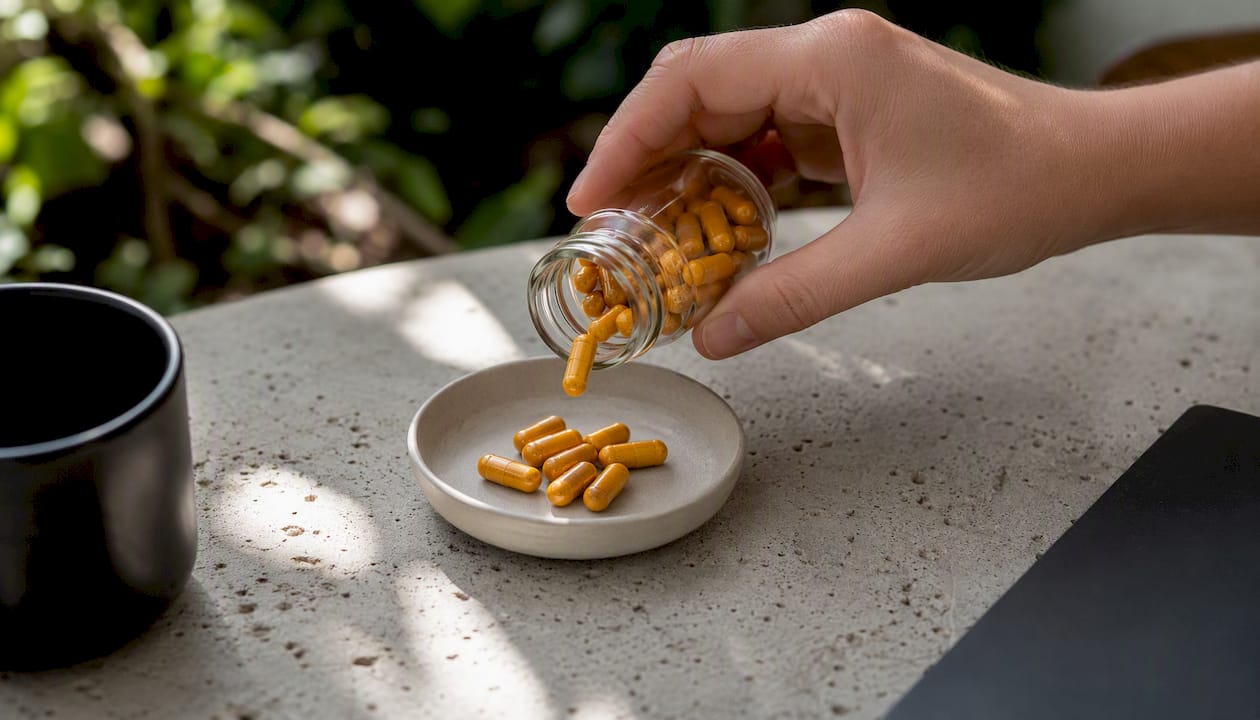
Onset in trials typically falls in the 4 to 8 week range. Common mild side effects include nausea, loose stools, and stomach upset at higher doses.
What to look for on a curcumin label:
- Standardized curcuminoid content (aim for 95% curcuminoids)
- A named high-bioavailability delivery system (Theracurmin, BCM-95, C3 Complex, or equivalent)
- Black pepper extract (piperine/BioPerine) or a lipid-based carrier if no branded system is listed
- Dose per serving clearly stated in milligrams of curcuminoids, not just “turmeric extract”
- Third-party testing or batch certification
Pro Tip: If a product lists “turmeric root powder” as the primary ingredient with no bioavailability technology mentioned, the curcuminoid content reaching your joints is likely negligible. The label needs to specify the delivery system, not just the plant source.
Statistic callout: Some randomized trials report that high-absorption curcumin formulations produced pain relief comparable to NSAIDs in short-term studies, with fewer adverse events reported in the curcumin arm of those trials.
How glucosamine works: and why the form matters
Glucosamine is a naturally occurring compound found in cartilage, and the theory behind supplementation is structural: providing a precursor that the body uses to synthesize glycosaminoglycans, the building blocks of cartilage. Some researchers also propose chondroprotective signaling effects, where glucosamine may slow cartilage breakdown through anti-catabolic pathways, though this mechanism is less established than the structural precursor theory.
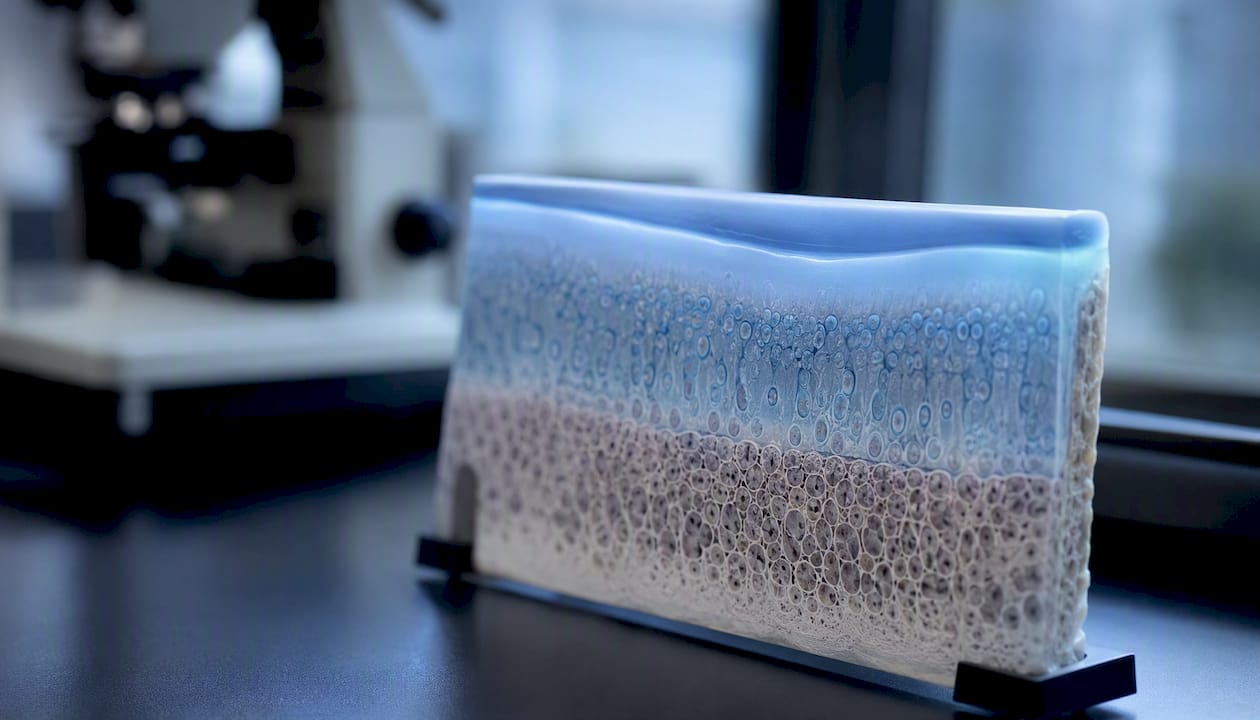
The formulation debate matters here. Glucosamine sulfate and glucosamine hydrochloride (HCl) are not interchangeable in the evidence base. Systematic reviews highlight that formulation differences drive much of the variability in trial results, sulfate trials, particularly those using pharmaceutical-grade preparations, tend to show more consistent modest benefits than HCl trials. The sulfate form may provide additional benefit through the sulfate ion itself, which plays a role in cartilage metabolism.
The standard clinical dose is 1,500 mg of glucosamine sulfate per day, typically taken as a single dose or split into three 500 mg doses. Individual trials at this dose show some symptom improvement, but results across the full trial landscape are not uniformly positive. Guideline bodies, including major rheumatology panels, have generally stopped short of recommending glucosamine as a standard treatment.
Time to effect is slower than curcumin. Most trials run 8 to 24 weeks, and researchers generally consider 8 to 12 weeks the minimum before drawing conclusions about whether it’s working for a given person.
What to look for on a glucosamine label:
- Glucosamine sulfate specified (not just “glucosamine” or glucosamine HCl)
- 1,500 mg per serving or clear per-dose breakdown to reach that daily total
- Source disclosure: shellfish-derived or synthetic (relevant for shellfish allergies)
- Chondroitin sulfate if included, with its own dose stated separately
- No proprietary blends that obscure individual ingredient amounts
Statistic callout: Meta-analyses and randomized trials for glucosamine show mixed results across studies; some pharmaceutical-grade glucosamine sulfate trials report modest improvements in pain and function, while guideline panels have often taken a cautious stance on routine use.
Side-by-side comparison: mechanism, dose, evidence, and best use
| Dimension | Turmeric (Curcumin) | Glucosamine Sulfate |
|---|---|---|
| Mechanism | Anti-inflammatory (NF-kB, COX-2 modulation) + antioxidant | Cartilage precursor; possible chondroprotective signaling |
| Typical dose | 500 to 1,000 mg curcuminoids/day (high-bioavailability form) | 1,500 mg glucosamine sulfate/day |
| Time to effect | 4 to 8 weeks in most trials | 8 to 12+ weeks minimum |
| Strength of evidence | Positive signals in RCTs/reviews; formulation-dependent | Mixed across trials; sulfate form shows more consistent modest benefit |
| Best for | Active inflammatory joint pain, swelling, short-term relief | Osteoarthritis-related cartilage symptoms, long-term structural support |
| Key safety notes | Blood thinning, blood glucose effects; avoid with anticoagulants | Blood sugar effects possible; shellfish allergy risk; check if diabetic |
The clearest practical difference: curcumin works on the inflammatory process driving pain now, while glucosamine targets the cartilage substrate that determines joint health over time. These are complementary goals, not competing ones. If your issue is a tendon or ligament rather than cartilage, see the research on collagen for tendons and ligaments.
Quick decision rules:
- Inflammatory pain, swelling, or stiffness that flares: start with a high-bioavailability curcumin
- Diagnosed osteoarthritis with cartilage-related symptoms and a long-term outlook: glucosamine sulfate is worth a structured trial
- Both symptoms present: a sequential or combined approach is reasonable (see the stacking section below)
- On blood thinners or diabetes medications: clinician check before either supplement
Available evidence suggests curcumin is stronger on inflammation and pain, while glucosamine and chondroitin target cartilage-related symptoms with more variable results, a distinction that should drive your starting choice.
When to pick turmeric, when to pick glucosamine, and when to use both
The decision comes down to three factors: your primary symptom, how quickly you need relief, and what medications you’re already taking.
Choose curcumin first if:
- Your main complaint is pain and inflammation that’s active and interfering with daily function
- You want to see a signal within 4 to 8 weeks before committing to a longer protocol
- You’re not on anticoagulants or blood sugar medications (or you’ve cleared it with your doctor)
Choose glucosamine sulfate first if:
- Your primary concern is osteoarthritis-related joint degradation and you’re thinking long-term
- Inflammatory symptoms are mild and your goal is structural support
- You’re willing to commit to a 12-week minimum trial with consistent daily dosing
Consider stacking both when:
- You have both active inflammation and diagnosed cartilage loss
- You’ve already trialed one for 8+ weeks and want to add the complementary mechanism
- Small trials on combination products (curcumin plus glucosamine and chondroitin) show promising signals, though the evidence base is limited
For trial duration: give curcumin a minimum of 4 to 6 weeks at a proper dose before concluding it isn’t working. Glucosamine needs 8 to 12 weeks. Don’t judge either supplement at two weeks, the biology doesn’t move that fast.
Pro Tip: If you want to know which supplement is actually helping, start one at a time. Run curcumin solo for 6 weeks, track your pain on a simple 1 to 10 scale, then add glucosamine if you want to test the stack. Combining both from day one makes it impossible to know what’s doing the work.
For a broader look at how supplements interact and stack safely, the guidance on adaptogen combinations from The Functional Sip covers useful principles that apply to multi-supplement protocols generally.
Safety, drug interactions, and who needs a clinician check first
Neither supplement is risk-free, and the interaction profile for curcumin in particular is clinically meaningful. Curcumin can interact with anticoagulants and affect blood glucose, anyone on warfarin, other blood thinners, or diabetes medications should consult their clinician before starting.
Who should check with a clinician before starting either supplement:
- People taking warfarin, heparin, aspirin therapy, or any anticoagulant
- Anyone on metformin, insulin, or other blood glucose medications
- People scheduled for surgery within 2 to 4 weeks (curcumin’s blood-thinning effects are a pre-surgical concern)
- Pregnant or breastfeeding people (safety data for either supplement in pregnancy is limited)
- Anyone with a shellfish allergy considering glucosamine (most commercial glucosamine is shellfish-derived; synthetic options exist)
- People with diabetes, since glucosamine may affect insulin sensitivity in some individuals
Common mild side effects:
- Curcumin: nausea, loose stools, stomach upset (usually dose-dependent and reduced by taking with food)
- Glucosamine: mild GI discomfort, heartburn, nausea (taking with food reduces this significantly)
- Both: headache reported occasionally in trials; rare allergic reactions
Statistic callout: Longer-term glucosamine trials generally report acceptable safety profiles over months of use, though long-term high-quality safety data remain limited. For curcumin, most short-to-medium-term trials report a favorable tolerability profile relative to NSAIDs.
The practical checklist for your clinician conversation: bring the product label (so they can see the exact form and dose), list every medication you’re on by name, state your planned daily dose and how long you intend to trial it, and ask specifically about blood thinning and glucose effects if either applies to you.
How to take each supplement: dosing, timing, and trial length
Getting the dose and delivery right matters as much as choosing the right supplement. A correctly chosen supplement at the wrong dose or in the wrong form will underperform.
Curcumin dosing and administration:
- Target 500 to 1,000 mg of standardized curcuminoids daily, using a high-bioavailability formulation
- Take with a meal containing fat, curcumin is fat-soluble and absorption improves significantly with dietary fat
- If your product contains piperine (black pepper extract), avoid taking it within 2 hours of other medications, since piperine also increases absorption of many drugs
- Minimum trial period: 4 to 6 weeks at consistent daily dosing; 8 to 12 weeks for a full assessment
Glucosamine dosing and administration:
- 1,500 mg glucosamine sulfate per day, taken as a single dose or split into three 500 mg doses with meals
- Taking with food reduces GI side effects for most people
- Minimum trial period: 8 to 12 weeks; some trials ran 6 months or longer before measuring structural outcomes
Monitoring while you trial:
- Track pain intensity on a simple 1 to 10 scale at the same time each day
- Note morning stiffness duration (a common OA marker)
- Record functional changes: stairs, walking distance, grip strength
- Stop and consult a clinician if you notice unusual bruising, blood sugar changes, or GI symptoms that don’t resolve within the first two weeks
Pro Tip: Stage your trial deliberately. Start with the supplement that targets your primary symptom. After 6 to 8 weeks, add the second if you want to test the combined effect. This approach gives you a real signal from each supplement rather than a blurred result from both at once.
What the clinical evidence actually shows
The evidence base for both supplements is real but imperfect, and understanding its limits helps you set realistic expectations.
Curcumin evidence summary:
Systematic reviews and RCTs consistently show positive signals for pain and function in small-to-moderate trials using bioavailable formulations. Effect sizes are generally modest to moderate. The formulation variable is so significant that reviews repeatedly identify bioavailability technology as the driver of positive outcomes, trials using plain curcumin powder tend to show weaker effects than those using enhanced delivery systems. One head-to-head trial reported pain relief comparable to NSAIDs with fewer adverse events, which is a notable finding, though it represents one study rather than a body of evidence.
Glucosamine evidence summary:
The glucosamine trial landscape is larger but more contested. Meta-analyses show mixed results, and recent systematic reviews attribute much of that variability to formulation differences and trial quality. Sulfate trials show more consistent modest benefit than HCl trials. Individual trials at 1,500 mg/day report some symptom improvement, but the signal is not uniform across studies.
What this means practically: curcumin has a cleaner evidence story when the right formulation is used. Glucosamine’s story is more complicated, but dismissing it entirely ignores the subset of trials, particularly pharmaceutical-grade sulfate studies, that do show modest benefit for osteoarthritis symptoms.
Clinical guidance and specialty reviews list both curcumin and glucosamine sulfate among supplements with some supporting evidence, while noting that major guideline panels stop short of endorsing routine use because of heterogeneity across trials.
How to pick a quality product for either supplement
Label reading is the skill that separates a supplement that works from one that doesn’t. Most of the variability in trial results traces back to formulation quality, and the same is true for what you buy off a shelf.
Curcumin product checklist:
- Standardized to 95% curcuminoids (stated on label)
- Named bioavailability technology: Theracurmin, BCM-95, C3 Complex, or a phospholipid/lipid-based system
- Dose per serving in mg of curcuminoids (not just “turmeric extract” weight)
- Third-party batch testing or certification
- Piperine/BioPerine listed if no other bioavailability system is present
Glucosamine product checklist:
- Glucosamine sulfate specified, not just “glucosamine”
- 1,500 mg per serving or a clear path to that daily total
- Source disclosed (shellfish-derived or synthetic)
- Chondroitin sulfate dose stated separately if included
- No proprietary blends hiding individual ingredient amounts
Pro Tip: Combination products that list curcumin, glucosamine, chondroitin, and several other ingredients in one capsule often underdose every single one. A product with eight joint ingredients at 100 mg each is not delivering a therapeutic dose of anything. Single-ingredient or two-ingredient products at full clinical doses almost always outperform the kitchen-sink blends.
For broader guidance on evaluating supplement quality and what to look for when comparing products, this supplement selection guide from The Functional Sip covers evaluation principles that apply across categories.
Nzsupps stocks supplements with fully disclosed ingredient listings, so you can verify the form, dose, and sourcing before purchasing. For anyone new to supplementing, the beginner supplement guide on the Nzsupps site is a useful starting point for understanding what to prioritize.
Browse the health and wellness range and read the ingredients for the product you are considering.
An honest take on what these supplements can and can’t do
The evidence for curcumin is genuinely encouraging, particularly for inflammatory joint pain. But there’s a version of the supplement conversation that oversells both of these compounds, and it’s worth naming it directly.
Neither curcumin nor glucosamine replaces exercise, weight management, or physical therapy for joint health. The trials that show the strongest results for both supplements are almost always run alongside standard care, not instead of it. A person who loses 10 pounds and starts a structured low-impact exercise program will likely see more joint pain improvement than someone who takes both supplements without changing anything else.
The other thing worth saying: the heterogeneity in glucosamine trials isn’t just a statistical nuance. It means that some people respond and some don’t, and the research can’t yet predict who. Glucosamine sulfate at 1,500 mg/day is a reasonable, low-risk trial for someone with osteoarthritis symptoms, but going in with a 12-week commitment and a clear exit criterion (defined improvement or you stop) is smarter than open-ended supplementation on hope.
Curcumin’s evidence is cleaner, but it’s still not a pharmaceutical-grade certainty. The comparison to NSAIDs in some trials is promising, not proven at scale. For people who can’t tolerate NSAIDs or want to reduce reliance on them, a high-bioavailability curcumin is a reasonable adjunct to discuss with a clinician, not a replacement for one.
Supplements work best when they’re chosen deliberately, dosed correctly, and evaluated honestly against a defined goal.
Nzsupps and joint supplement sourcing
If you’ve worked through this article and you’re ready to trial one or both supplements, the practical next step is finding products that actually match the formulation criteria above.
Nzsupps carries a curated range of supplements with fully disclosed ingredient listings, so you can verify curcuminoid content, delivery system, and dose before you buy. The store’s product pages list exact ingredient forms and amounts, the transparency that makes label-checking possible rather than guesswork. Whether you’re starting with a curcumin product, a glucosamine formula, or building a broader joint-support stack, the range covers the key categories. If you’re on medications, review the safety section above and confirm with your clinician first. Browse the Nzsupps supplement range to find products that match your dosing and formulation criteria.
Sources
The following sources were used in preparing this article. Each is publicly accessible and worth reviewing if you want to go deeper into the clinical evidence.
- Drugs
- PMC article (curcumin clinical review)
- PubMed listing for curcumin trial(s)
- PubMed listing related to glucosamine trials/meta-analysis
- PMC article on glucosamine evidence heterogeneity
When reading clinical literature, pay attention to sample size, the specific formulation used, and trial duration. A small 6-week trial with a proprietary curcumin form tells you something different from a 6-month pharmaceutical-grade glucosamine sulfate study. Discussing findings with a clinician who knows your full medication list and health history will always give you more relevant guidance than any single article or trial.
This article provides general information only and is not a substitute for professional medical advice. Consult a qualified clinician before starting any new supplement, particularly if you are on medications or managing a health condition.