SHOP NOW, PAY LATER









 Informed Sport
 Informed Choice
 NSF Certified for Sport
 HASTA Certified

You've seen the plain white tubs next to the creatine, about fifty bucks, promising recovery. Somebody at the gym told you it helps you bounce back between sessions. The honest version: glutamine is a real amino acid your body uses constantly, but as a supplement for a healthy person who lifts, the case is thin.
The short answer
- Glutamine is the most abundant free amino acid in your body, and your body makes plenty of it on its own. A normal mixed diet adds roughly 3 to 6 g a day on top of that.
- For muscle growth and recovery in healthy trained people, the supplement evidence is weak. Examine's glutamine page rates the muscle and strength outcomes as unsupported or minimal.
- Where there is something worth reading is gut and intestinal permeability work, mostly in specific contexts like heat stress or long endurance efforts. That is early research, not a treatment.
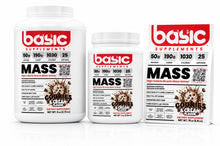
- In stock at NZ Supps: MusclePharm Glutamine Essentials at $49.45 for 60 serves, which is $0.82 a serve. Basic Supplements Glutamine is $58.95 for 60 serves, or $0.98 a serve.
- If money is tight, protein powder and creatine come first. Every time. MusclePharm Creatine Essentials is $40.90 for 60 serves and has a far better evidence record.
What glutamine actually does in the body
Glutamine is a non-essential amino acid, which is a technical way of saying you don't have to eat it. Your muscles synthesise it from other amino acids and hold a large free pool of it. Fast-turnover cells burn it as fuel, including immune cells and the cells lining your intestine. None of that is in dispute.
The dispute is whether topping up an already large pool changes anything you can feel or measure. In a healthy person who trains four times a week and eats enough protein, the answer looks like no.
Does glutamine build muscle or speed up recovery?
Short version: probably not. This is the claim on most tubs and it's the claim with the least behind it.
Examine's glutamine page summarises the human trials in trained and untrained people, and the outcomes for lean mass, strength and soreness sit at no meaningful effect. Some studies show a small change in a soreness score, others show nothing.
The reason is easy to guess. Whey protein is roughly 4 to 8 percent glutamine by weight, so a 30 g scoop already delivers a gram or two. Add meat, dairy and eggs and you're well past what a 5 g scoop adds.
If your goal is muscle, the lever that moves is total daily protein. Morton's 2018 meta-analysis in the British Journal of Sports Medicine puts the useful ceiling around 1.6 g per kg of bodyweight per day. Glutamine does not substitute for hitting that number, and how much protein per day has the maths for your weight.
The gut angle, and how much to make of it
This is the part that gets glutamine talked about outside gyms. Intestinal cells use glutamine as a preferred fuel, and researchers have looked at whether supplementing it affects gut barrier function under stress. Some of that work sits in endurance sport, where long efforts in heat can push gut permeability up. Results are mixed and the doses vary a lot.
So the fair framing is: some evidence, in specific contexts, in small studies. Not a fix for a sore stomach, not a treatment for anything, and not a reason to expect a difference if you train for an hour in a normal Kiwi gym. If gut comfort during long sessions is your actual problem, food timing and drink concentration usually matter more, and probiotics for athletes covers the other angle people ask about.
What glutamine costs in New Zealand
Every glutamine we stock is 5 g per serve of plain unflavoured powder, 300 g a tub, 60 serves. Same molecule across brands, so this is a straight price comparison.
| Product | Per serve | Serves | Price | Price per serve | Flavour |
|---|---|---|---|---|---|
| MusclePharm Glutamine Essentials | 5 g | 60 | $49.45 | $0.82 | Unflavoured |
| Basic Supplements Glutamine | 5 g | 60 | $58.95 | $0.98 | Unflavoured |
| GAT Sport Essentials L-Glutamine (currently out of stock) | 5 g | 60 | $39.25 | $0.65 | Unflavoured |
Prices as at 2 September 2026.
For context, creatine monohydrate runs from about $0.58 to $0.72 a serve across the tubs we carry, so glutamine is not cheap by comparison, and creatine has the stronger case behind it.
So when is it still worth buying?
There are a few honest reasons to own a tub, and none of them are "it builds muscle".
You train at very high volume, twice a day or close to it, and you want to cover a base that costs under a dollar a session. Fine. That's a small spend against a large training load.
You like the ritual. Plenty of people find that a post-session shake with something added is what keeps them consistent, and that has real value even if the powder does nothing measurable. It also helps that glutamine has almost no taste, so it stirs into a shake, a smoothie or plain water without changing it.
What doesn't justify it: buying glutamine instead of protein or creatine because a label says recovery. If your budget is under $100 a month, spend it on a protein powder you'll actually drink and a creatine tub, then revisit. Our 5 supplements worth starting with piece leaves glutamine out for exactly this reason.
Dosing, timing and a sample day
The dose people use is 5 g, one scoop of every tub above. Some protocols go to 10 g split across two servings, usually in endurance research rather than gym settings. There's no evidence that a particular window matters, so put it wherever you'll remember it.
A realistic day for an 80 kg lifter who wants glutamine in the mix:
- Morning: normal breakfast, no supplement needed.
- Pre-session: water, and creatine at 5 g if you take it.
- Post-session: 30 g whey plus 5 g glutamine in the same shaker.
- Rest of day: food does the work. Aim for around 128 g protein total at 1.6 g per kg.
Safety at normal doses is unremarkable. The main complaint people report is mild stomach discomfort at much higher intakes. If you compete in a tested sport, check the batch testing on whatever you buy.
Where NZ Supps fits
We're based in New Zealand, we dispatch same day on orders placed before 1pm, and shipping is free over $70. We stock glutamine because people want it and it's cheap enough to be a reasonable add-on, not because we think it's a priority buy.
Building a first stack? Start at find your stack and put your money into the creatine range first. For aminos around training, the intra-workout and EAA range is a better place to look, and EAA vs BCAA explains the difference.
Is glutamine worth taking?
For muscle and strength, the evidence says no meaningful benefit in healthy trained people. It can still be a reasonable add-on at around $0.82 a serve if you train at high volume. It should never be the first supplement you buy.
What does glutamine do for the gut?
Cells lining the intestine use glutamine as a fuel, and there is research on supplemental glutamine and gut barrier function, mostly in stressed states and long endurance efforts. It's early, small-scale work and the doses differ between studies. Treat it as an interesting area, not a solution.
How much glutamine should I take a day?
Five grams is the standard serve and what every tub we stock provides. Some studies use 10 g split into two doses. There's no evidence that going higher does more for a healthy person who trains.
Does glutamine help with muscle soreness?
Some small trials report a lower soreness score, others find nothing, and the overall picture doesn't support a reliable effect. Sleep, total protein and sensible training progression move soreness far more than a 5 g scoop.
Can I take glutamine with protein and creatine?
Yes. Glutamine is unflavoured and mixes into a protein shake without changing the taste. Most people who take all three put glutamine and protein in the same shaker.
Is there glutamine in protein powder already?
Whey is roughly 4 to 8 percent glutamine by weight, so a 30 g serve already contains a gram or two. That's part of why a separate tub adds so little for most people. Our best whey protein guide covers picking one. Sources: Examine.com glutamine topic page (https://examine.com/supplements/glutamine/); Morton et al. 2018, British Journal of Sports Medicine (https://bjsm.bmj.com/content/52/6/376); prices from nzsupps.co.nz as at 2 September 2026.