SHOP NOW, PAY LATER












 Informed Sport
 Informed Choice
 NSF Certified for Sport
 HASTA Certified

Keeping strength as you get older makes everyday life easier. Carrying the shopping, getting up off the floor, playing with the grandkids. Creatine is one of the most studied supplements in sport, and there is a growing body of research on older adults too. Here is what it can realistically do, what it cannot, and how to take it.
The short answer
- Creatine works best with resistance training. Paired with regular lifting, it has helped older adults gain more strength and lean mass than training alone.
- Dose: 3 to 5g a day. No loading phase needed.
- Bone and brain: early research, mixed results. Promising, not proven.
- Safety: well studied in healthy people. Check with your GP if you have kidney issues or take regular medication.
- What to buy: plain creatine monohydrate. Nothing fancy.
What the research found
The strongest evidence comes from studies that pair creatine with resistance training. A meta-analysis by Chilibeck and colleagues (2017) pooled trials in older adults and found that creatine plus resistance training increased strength and lean mass more than resistance training alone.
That last part matters. Creatine does not build muscle on its own. It helps your muscles store more of the quick-release energy they use for short, hard efforts like a set of squats. That can mean an extra rep or two, and over months those extra reps add up.
So the honest framing is this. If you lift weights, or are willing to start, creatine may help you get more from each session. If you do not train, do not expect much from the tub. Our post on lifters over 40 covers how to build a simple routine around it.
Bone and brain: early, mixed evidence
You will see creatine linked to bone health and brain function more and more. There is real research here, including a review by Candow and colleagues (2019) that looked at creatine and ageing muscle and bone.
The honest summary is that the bone and brain findings are early and mixed. Some studies show benefits, others show little or no effect. These are interesting areas to watch, but they are not a reason to buy creatine on their own. Buy it for strength and muscle with training, and treat anything else as a possible bonus.
How much to take
The International Society of Sports Nutrition position stand supports 3 to 5g a day for most adults. The same dose applies as you get older.
You do not need a loading phase. Loading just gets your muscles topped up a bit faster. At 3 to 5g a day, you reach the same place within a few weeks, with less chance of an upset stomach. If you are curious about loading, our creatine loading phase post explains both approaches.
Timing does not matter much. Take it with breakfast, in your morning coffee, or in a shake after training. The best time is the one you will stick to every day.
Safety
In healthy people, creatine at normal doses has a strong safety record. It is one of the most tested supplements there is.
A few sensible points for older adults:
- Kidneys. If you have kidney disease or reduced kidney function, talk to your GP before starting. For healthy people, our post on does creatine damage kidneys walks through what the research says.
- Blood tests. Creatine can raise creatinine, a marker doctors use on routine kidney tests. Tell your GP you take it, so the result is read in context.
- Medication. If you take regular medication, check with your GP or pharmacist first.
- Water. Keep drinking normally through the day.
Choosing a creatine
Keep it simple. Plain creatine monohydrate is the most researched form and usually the best value. You do not need special blends or newer forms for this goal.
A few good options we stock:
| Product | What it is | Good for |
|---|---|---|
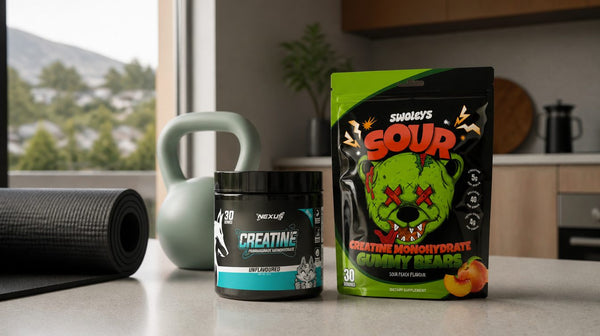
| Nexus Creatine Monohydrate 500g | Micronised, nothing else added | A big tub for long-term daily use |
| EHPlabs Crea-8 | 5g of micronised monohydrate per scoop, 100 serves | Unflavoured, easy dosing |
| Athletech Purest Creatine | NNB-sourced, fine 200-mesh powder | Mixing smoothly into any drink |
The Nexus tub is a pure, micronised monohydrate from a New Zealand-owned brand, and the 500g tub lasts a long time at 3 to 5g a day. Crea-8 is plain micronised creatine at 5g a scoop, with no fillers, flavour or dyes. Athletech uses a fine 200-mesh powder that mixes cleanly into water, juice or a shake.
If you compete in a tested sport, such as masters athletics or cycling, have a look at our tested-for-sport supplements.
Where NZ Supps fits
We stock a wide range of creatine, from small tubs to value sizes, alongside our strength and power range if you are building a fuller routine. Pairing creatine with enough protein makes a real difference as you age, so our guide to protein for older adults is a good next read.
Not sure what else you need? The Find Your Stack quiz takes about a minute. Orders over $70 ship free.
FAQ
Is creatine good for older adults? For older adults who do resistance training, creatine is one of the better-supported supplements. Research reviews have found that creatine plus training increased strength and lean mass more than training alone. It is not a replacement for the training itself.
How much creatine should someone over 60 take? The standard dose is 3 to 5g a day, the same as for younger adults. You do not need a loading phase. Take it at any time of day that you will remember, with water or a drink you already have.
Is creatine safe for seniors? In healthy people, creatine at normal doses has a strong safety record. If you have kidney disease, take regular medication or have other health conditions, talk to your GP before starting, and let them know you take it before any blood tests.
Does creatine help with bone density or memory in older adults? There is early research on both, but the results are mixed. It is fair to call these areas promising and still being studied. The best evidence is for strength and muscle when creatine is paired with resistance training.
What is the best creatine for older adults? Plain creatine monohydrate. It is the most researched form and usually the best value. A micronised, unflavoured powder mixes easily into water, juice or a protein shake.