SHOP NOW, PAY LATER











 Informed Sport
 Informed Choice
 NSF Certified for Sport
 HASTA Certified

You're standing in a New Zealand supplement shop, comparing hemp, pea, soy and whey powders. One label says a scoop delivers 15 g of protein, another advertises 50% to 52% protein, and the earthy flavour makes the choice harder than the marketing suggests. The sensible question isn't whether hemp protein sounds healthy. It's how much usable protein you're getting per serve, what else comes with it, and whether the price reflects local origin or clever packaging.
Hemp protein can work well for Kiwi lifters, vegan athletes and anyone wanting protein with substantial fibre. It won't always be the most concentrated or easiest-mixing option. This guide focuses on the practical maths, New Zealand sourcing clues, testing considerations and honest trade-offs behind hemp protein powder NZ shoppers find on shelves.
Table of Contents
- What Hemp Protein Powder Actually Is in NZ
- The Nutrition Profile You Should Actually Notice
- Hemp Protein vs Other Plant Proteins in NZ
- What NZ Shoppers Should Look For When Buying
- How to Use Hemp Protein for Training and Everyday Goals
- Who Should Choose Hemp Protein and Who Should Think Twice
- Common Hemp Protein Myths and Misunderstandings in NZ
What Hemp Protein Powder Actually Is in NZ
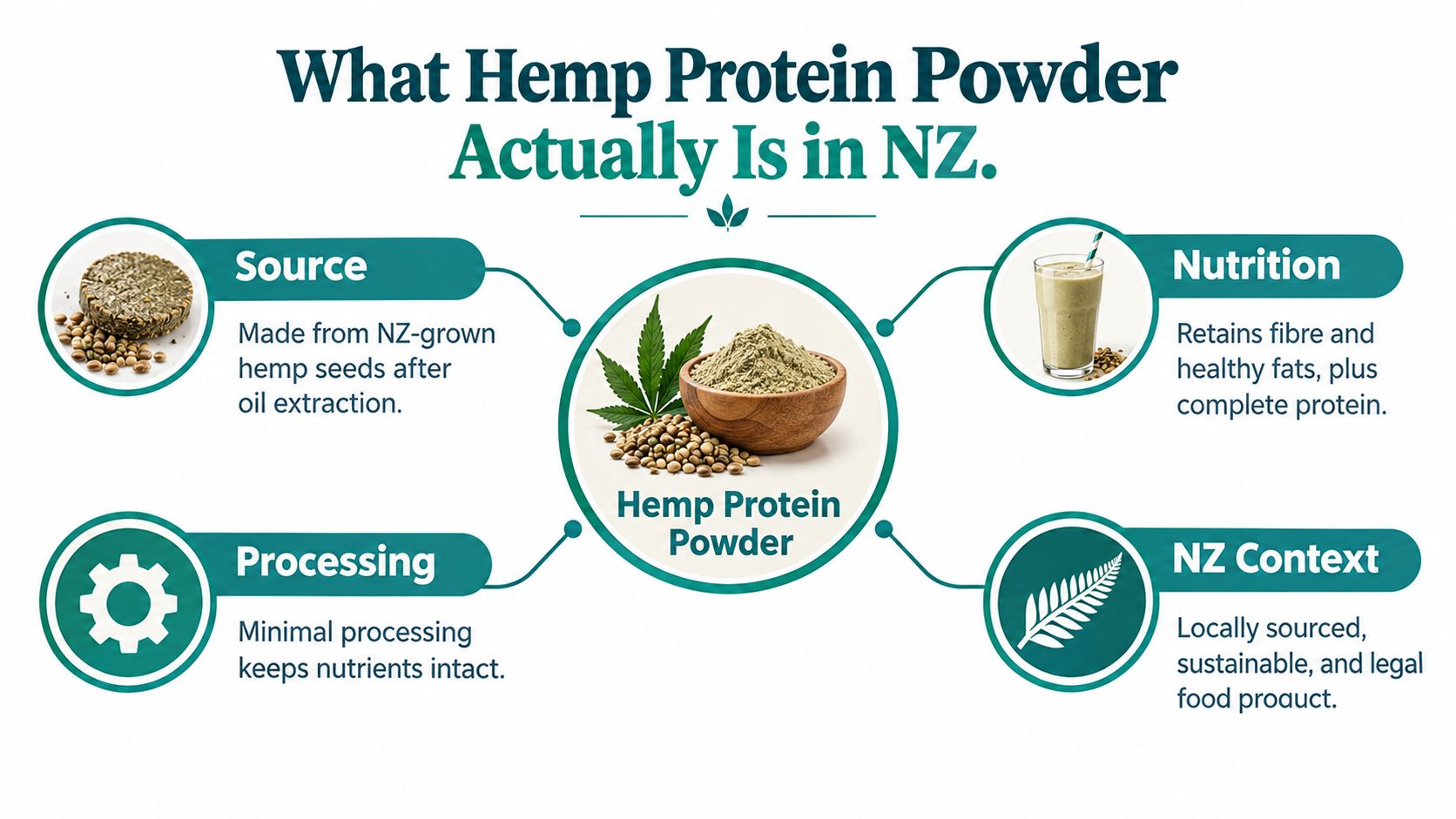
Hemp protein starts with the seed. Manufacturers generally press out much of the oil, then mill the remaining seed material into powder. Unless it is refined further, the result still contains meaningful fibre and fat, so it mixes and digests differently from a highly filtered dairy isolate. That difference matters at the shaker, not just on the ingredient panel.
New Zealand's legal framework sets the boundary for hemp foods. Amended regulations came into force on 12 November 2018, classifying low-THC hemp seeds and hemp seed food products as food under the Food Act 2014. The related trans-Tasman food-standard change had been approved on 28 April 2017. Retail hemp seeds must be non-viable and hulled, with total THC no more than 5 mg/kg, under the Food Hemp Seeds and Hemp Seed Food Products Amendment Regulations.
Why local context changes the buying decision
Those rules do not prove that a bag sold in New Zealand contains locally grown hemp. Some products use NZ-grown seed, while others are imported and packed locally. Look for a clear country-of-origin statement rather than treating local packaging as local cultivation.
New Zealand's cultivation base is smaller and more changeable than many shoppers assume. An industry summary records cultivation falling from about 1,335 hectares in 2020 to about 180 hectares by 30 June 2024, with 59 active general licences in May 2025. It also places the industry at approximately NZ$3–5 million in 2020 and around NZ$1 million in 2025. These figures point to a limited local raw-material base, not a large commodity supply (NZ iHemp Statistics 2023.2024).
Practical rule: Treat “packed in New Zealand” and “grown in New Zealand” as different claims.
A less processed product, such as shelled hemp seed mix, shows the seed-based origin but is not a substitute for a measured protein-powder serve. Compare protein per serve first. Then decide whether the added fibre, earthy taste and verified NZ origin justify the price.
The Nutrition Profile You Should Actually Notice
A hemp protein can look attractive on the front of the bag, yet the shaker tells the more useful story. A practical New Zealand benchmark provides 15 g of protein per 30 g serve, with 7–8 g of fibre, approximately 3.5 g of fat, and very low sodium, listed between 0 and 4.8 mg (Hemp Protein Powder nutrition information). Those figures describe a food-style powder rather than a stripped-back whey isolate.
The fibre is part of the product's value and part of its trade-off. It can add fullness and give a breakfast smoothie or snack more staying power. It can also make a large serve feel heavy before hard training, especially if you are not used to high-fibre shakes.
The label maths
Protein percentage helps compare bags, but the serve size determines what actually reaches your shaker. The benchmark range of 44–52 g of protein per 100 g sits well below dairy isolates containing 80% or more, based on a local hemp-protein comparison (NZ Protein Hemp Protein).
That gap changes the value calculation. Someone accustomed to a compact whey serve may need more hemp powder to reach the same protein target, bringing extra fibre and a thicker texture with it. Compare protein per actual serve, total serves in the bag, and how often you expect to use it. A lower shelf price does not automatically mean a lower cost per useful protein serve.
Amino acids and recovery expectations
NZ hemp labels commonly present the powder as containing all nine essential amino acids:
- Leucine, isoleucine and valine, the branched-chain amino acids commonly considered in training nutrition.
- Lysine and methionine, useful comparison points when weighing plant proteins.
- Threonine, tryptophan, histidine and phenylalanine, completing the stated essential amino-acid profile.
On the label, that makes hemp a complete protein. It does not make every scoop equivalent to a dairy isolate for protein density or leucine delivery. Strength athletes can use hemp as one protein source across the day, or combine it with another plant protein, while choosing a more compact option when post-training convenience matters most.
Timing deserves the same attention as the amino-acid panel. Breakfast and afternoon snacks are often easier fits than a large shake before sprint work, heavy leg training or endurance exercise. Start with the listed serve, check digestion, and adjust timing before adding more powder.
Hemp Protein vs Other Plant Proteins in NZ
You are comparing protein per scoop, not just the name on the bag. Hemp suits shoppers who want fibre, a seed-based ingredient and a commonly stated complete amino-acid profile. Whey suits those chasing high protein density and easy mixing. Pea and soy generally sit between those options, while rice is often blended to improve amino-acid balance and texture.
NZ-grown hemp powders commonly provide around 45% to 52% protein, but serving calculations differ between products (Hemp Protein Powder listing). A scoop is not a useful comparison until you check the powder weight, protein grams and fibre grams together. The practical question is how much powder you need to reach your target.
A side-by-side buying view
| Protein Type | Typical Protein % | EAA Completeness | Fibre Contribution | Best For |
|---|---|---|---|---|
| Hemp | 44–52% in the cited NZ benchmark | Commonly claimed complete | High relative to isolates | Whole-food style plant nutrition and satiety |
| Whey isolate | 80%+ in the cited comparison | Complete | Usually low | Compact post-training protein |
| Soy | Varies by product | Complete | Product-dependent | Plant-based shoppers wanting a familiar complete protein |
| Pea | Varies by product | Often used alone or in blends | Product-dependent | Mild plant options and blend formulations |
| Rice | Varies by product | Often paired with another plant protein | Usually modest | Blends aimed at texture and amino-acid balance |
The hemp and whey figures come from the stated NZ comparison. Pea, soy and rice vary by formulation, so read the label rather than treating a category description as a guarantee.
Texture can decide whether you finish the bag. Hemp has an earthy, thicker character. Pea is often milder, whey commonly mixes more smoothly, and rice may feel chalky unless blended well. This pea, rice or hemp protein for digestion comparison helps if tolerance and mouthfeel matter as much as the headline protein figure.
Soy and pea are practical picks for a cleaner-tasting shake with less seed flavour. Hemp earns its place when fibre and a more substantial smoothie matter to you. It may require more powder than a compact whey serve to reach the same protein target, which also means more fibre and thickness. Compare cost per useful protein serve, not only the shelf price.
For the plant-protein differences that matter most between soy and pea, use this pea versus soy protein guide, then compare the actual serving panel on the product you plan to buy.
What NZ Shoppers Should Look For When Buying
A shopper comparing two hemp powders may see similar front labels, then find very different scoop sizes and protein totals. Start with protein per 100 g, then calculate the amount in the serve you would use. This gives a fairer comparison than judging the scoop claim alone.
Read the label in this order
- Protein percentage: Use the protein value per 100 g to compare powder density across bags. NZ-grown products can differ, so do not assume two hemp powders provide the same return for each gram purchased. Check the nutrition panel first, then compare the result with the benchmark established earlier in this article.
- Protein per serve: Confirm the stated serve weight and the protein it provides. A generous scoop may deliver more protein, but it also uses more powder and may increase fibre, thickness and cost per shake. Calculate how many serves the bag gives at your normal intake.
- Origin wording: “New Zealand grown” refers to local cultivation. “Packed in New Zealand” refers to final handling and does not necessarily identify where the seed was grown. If local origin matters, look for a clear statement about cultivation and processing rather than relying on a fern graphic or broad sustainability wording.
- Ingredients and processing: A short ingredient list makes the product easier to assess. Flavourings, sweeteners, gums and added proteins can improve taste or mixability, though they also mean you are buying a blend rather than a straightforward hemp powder. Compare the ingredient order with the protein contribution, not just the product name.
- Testing information: Athletes subject to drug-testing rules should look for clear batch-testing details and a supplier that explains its quality controls. Testing cannot remove every supplement risk. Follow the relevant sporting body's guidance and favour products with independent testing information where available.
Taste is a quality clue, but not a quality verdict
Hemp protein usually has an earthy, nutty flavour. A neutral product may be flavoured or blended, while a stronger grassy taste can reflect the raw material and processing. The useful test is consistency. If you will only finish the bag in smoothies, oats or baking, that matters more than a promising front label.
For blend decisions, compare NZ protein powder blends by their ingredient list, serving size and protein contribution. A blend may improve texture and amino-acid balance, but a complicated formula should not hide a weak protein return. Judge the bag by protein you can use, not the scoop size printed on the front.
How to Use Hemp Protein for Training and Everyday Goals
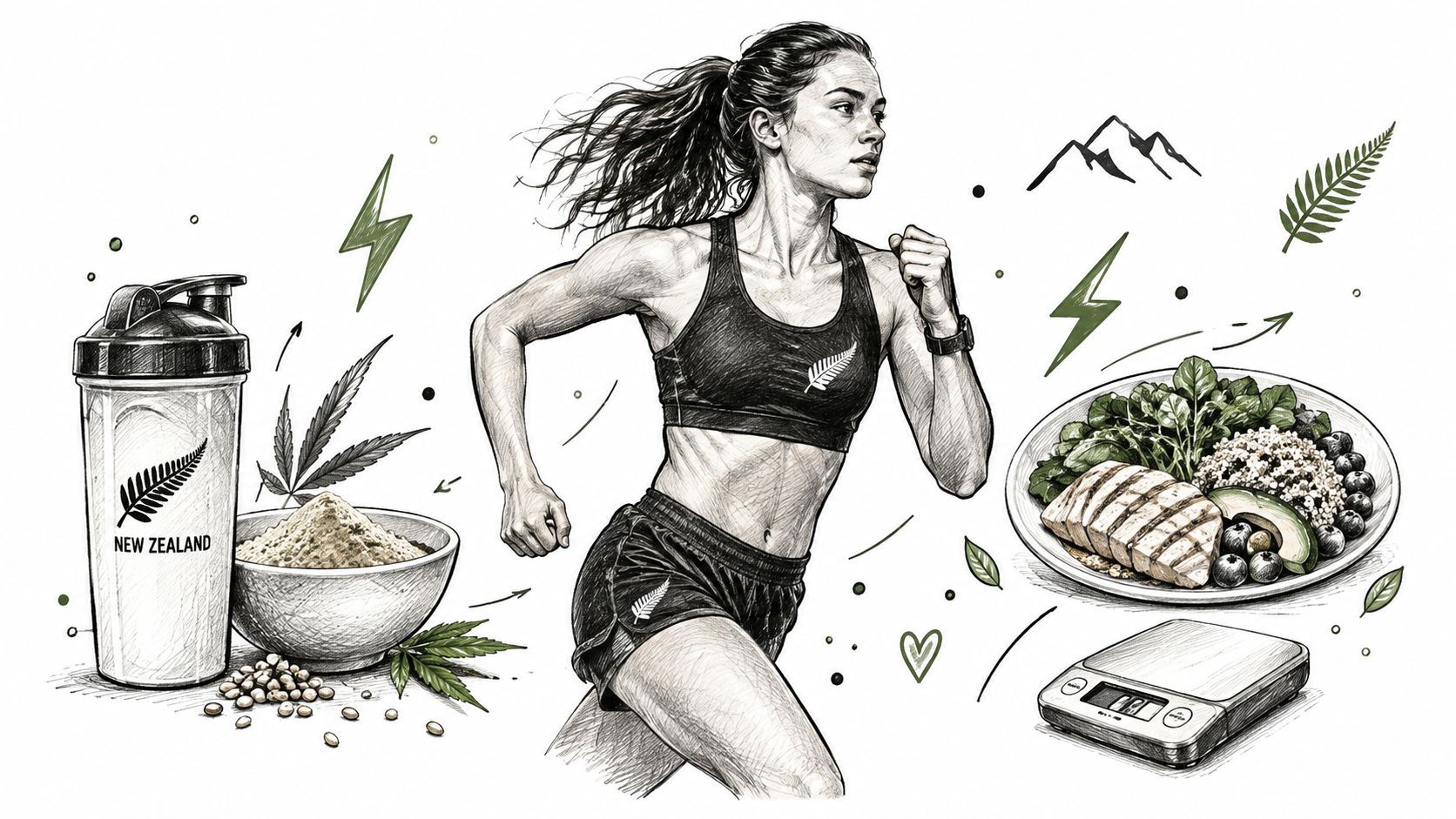
You finish an early gym session, need breakfast quickly, and want more protein without building a complicated meal. Hemp works well in a smoothie with frozen berries, banana, oat milk and nut butter, provided you accept its thicker texture and earthy flavour. An endurance athlete may use the same approach after a long session, adding fruit and enough liquid to make the shake easier to drink. Treat hemp as a textured food, not a flavourless powder designed to disappear in water.
Match the format to the goal
For everyday meals, stir hemp into oats, yoghurt, overnight oats or baking. After training, blend it with fruit and dairy or non-dairy milk. A thicker base improves the drinking experience and gives the powder a useful place in the meal.
Fibre affects timing. If your stomach handles it comfortably, hemp can fit after exercise. If a high-fibre shake feels heavy during training, move it to breakfast or an afternoon meal and use a more concentrated protein source closer to your session. The right choice depends on how much protein you need per serve and how well you digest the full meal.
Serving reality: A larger hemp serve can help you reach your protein target, but it also increases the fibre and volume you're consuming.
Hemp can be combined with creatine, an EAA or BCAA blend, or a hydration formula when those additions address a genuine gap in your diet or training. They do not change hemp's protein concentration, so calculate the base protein before adding extras. For meal timing ideas, this protein timing guide provides a practical framework without forcing every shake into a narrow post-workout window.
Easy combinations that actually work
- Berry breakfast: Hemp, frozen berries, banana, milk or plant milk, and nut butter.
- Training-day oats: Stir hemp through cooked oats after they cool slightly, then add cinnamon and fruit.
- Baking: Add it to muffins or slices, while allowing for a drier mixture if you use more powder.
- Meal-style smoothie: Combine hemp, fruit, oats, seeds and a liquid base for a more filling option.
- Portable snack: If mixing powder is impractical, compare it with high-protein low-sugar bars as a convenient alternative.
Repeatability matters. If the flavour requires a large amount of sweetener, or the fibre interferes with training, use another protein at that time of day. Hemp can still serve a useful role in breakfast, baking or a meal-style shake.
Use the video below as general inspiration for fitting hemp into an active routine, not as a personal prescription.
Who Should Choose Hemp Protein and Who Should Think Twice
Hemp is a strong candidate for shoppers who want a plant-based protein with natural fibre, who avoid dairy, or who prefer a less refined seed-derived food. It also suits people who want their shake to contribute to fullness rather than deliver protein with almost no other texture or nutrition.
A competitive athlete should assess it more strictly. If you need a compact, high-protein post-training serve, hemp's lower concentration may make whey isolate, soy, pea or a formulated blend more efficient. If you're sensitive to fibre before exercise, the same issue applies. The powder may be nutritious, but nutrition and convenience aren't the same thing.
Use this quick decision test
- Choose hemp if fibre, plant origin and a whole-food style profile matter to you.
- Choose another protein if your main requirement is maximum protein per scoop.
- Consider a blend if you want a smoother texture or a broader plant-protein formulation.
- Check your budget by protein gram, not bag price.
- Confirm origin if NZ-grown ingredients are part of your reason for buying.
- Prioritise testing transparency if you compete under drug-testing rules.
There's no prize for choosing the most fashionable protein. Hemp is a sensible tool for some meals and a poor fit for others. The decision becomes straightforward once you line up your diet, training timing, digestion, flavour tolerance and target protein amount.
Common Hemp Protein Myths and Misunderstandings in NZ
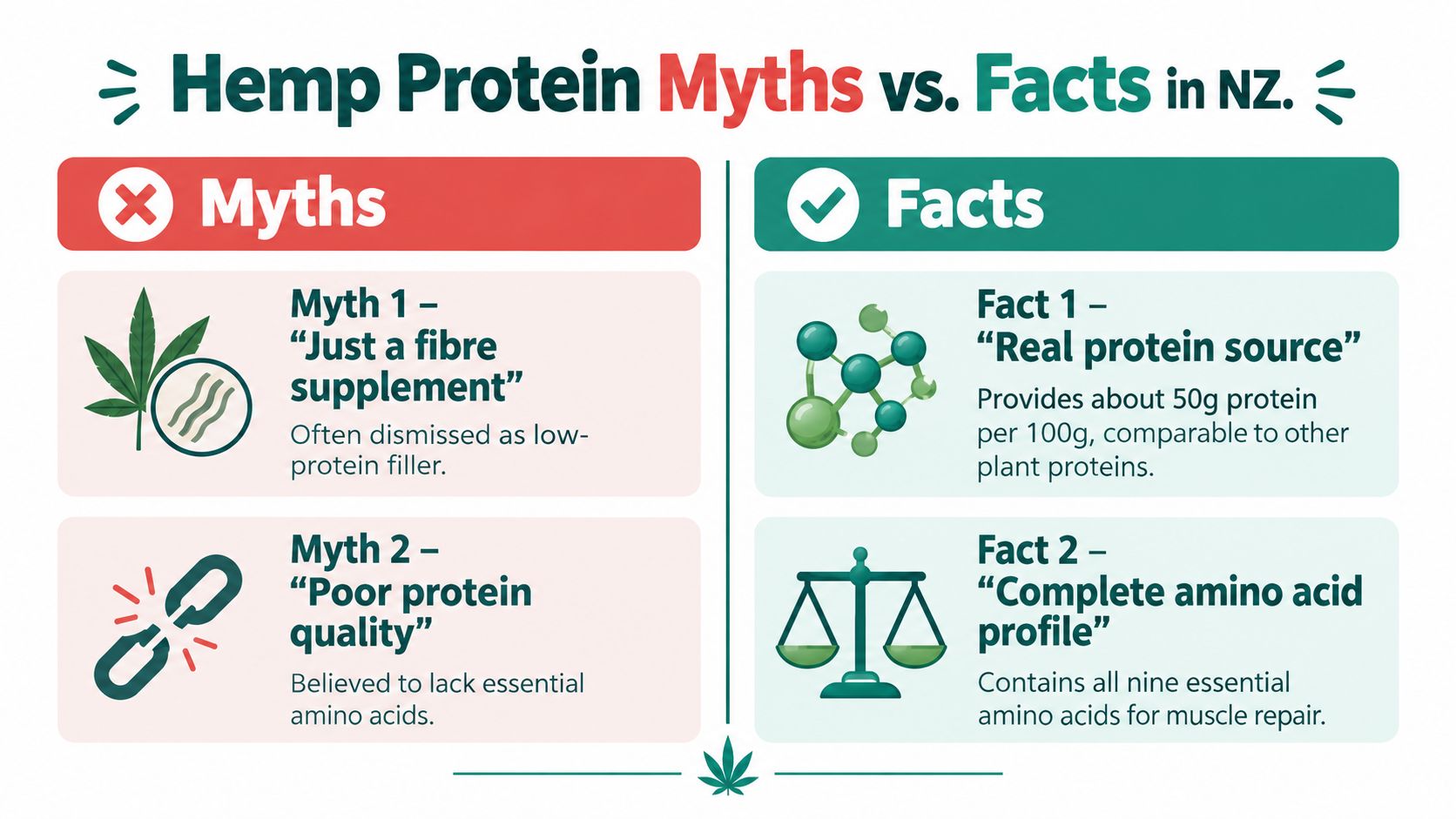
A common myth is that hemp protein is only a fibre supplement. That usually comes from comparing it with whey isolate instead of checking the product label. As benchmarked earlier, NZ hemp powders can provide a meaningful protein contribution alongside substantial fibre. The trade-off is clear: hemp is less concentrated than a highly filtered isolate, so the scoop delivers more than protein alone.
Another misconception says hemp protein is incomplete. NZ labels can list all nine essential amino acids, so completeness is not the main concern. The practical issue is density. A complete amino acid profile does not mean a smaller hemp serve supplies the same total protein or leucine as a more concentrated isolate. Compare the amount per serve, then decide whether the extra powder fits your daily target.
The taste myth needs more nuance
Hemp powders do not all taste the same. Seed origin, processing, flavouring and blending affect whether a shake seems earthy, nutty, gritty or smooth. Plain powder usually presents the seed flavour more strongly. A blend may drink more easily, but it gives a less direct taste of hemp itself.
Price creates another misunderstanding. A cheap bag is not automatically poor quality, and a premium price does not prove a better product. Protein concentration can affect value, while origin, testing, ingredient simplicity and mixability may justify paying more. Compare those details directly rather than paying for broad wellness language.
What informed buying looks like
Judge hemp by what it delivers per serve, how much fibre comes with it, where the seed originated and whether you will use it consistently. The bag price alone tells you little about value.
Hemp works well for buyers who accept its real character: a complete plant protein with substantial fibre, a distinct flavour and lower protein density than many dairy isolates. Those are practical trade-offs, not defects. Price the product by usable protein and plan your serving around your training and digestion.
NZ Supps makes it easier to compare hemp, pea, whey and blended proteins by ingredient transparency and per-serve value, with genuine sealed products held and dispatched locally from Palmerston North. Visit NZ Supps to compare protein options, check Tested for Sport products and build a stack that fits your training, diet and budget.