SHOP NOW, PAY LATER









 Informed Sport
 Informed Choice
 NSF Certified for Sport
 HASTA Certified

With iron, how you take it matters almost as much as what you take. Swallow it with your morning flat white and a good chunk may never reach your blood. Take it at the right time, with the right partner, and the same tablet may do a lot more.
One line before we start: iron is worth testing, not guessing. Get your levels checked with your GP first, because too much iron is a real problem, not just a waste of money.
The short answer
- When: morning, or before training rather than straight after.
- With: vitamin C, from juice, fruit or a formula that includes it.
- Away from: coffee, tea, calcium and antacids, by about two hours.
- How often: alternate days may absorb better than every day.
- If it upsets your stomach: switch to a gentler form like iron bisglycinate.
Timing: morning, and away from training
After exercise, your body releases a hormone called hepcidin. It controls how much iron your gut lets through, so when it rises, absorption drops. A 2019 review on iron for athletes in the European Journal of Applied Physiology explains that this rise can last for hours after a session, which is why morning or pre-session dosing is often suggested.
In practice, that means:
- If you train in the evening, take iron in the morning.
- If you train in the morning, take it before the session rather than with your post-workout meal.
For a deeper look at why active people run low in the first place, read our guide to iron for athletes.
Pair it with vitamin C, keep it away from coffee, tea and calcium
Vitamin C helps your body absorb iron from supplements and plant foods. A glass of orange juice with your iron is a cheap, easy upgrade, or a formula with vitamin C built in does it for you.
The other side is what gets in the way:
- Coffee and tea. Compounds in both can bind to iron and reduce absorption. This is the one most people trip over.
- Calcium. Calcium supplements, milk and big dairy-heavy meals can compete with iron.
- Antacids. Stomach acid helps iron absorb, so anything that reduces it can get in the way.
The easy fix is a two-hour gap. Have your iron with water and some vitamin C, then wait about two hours before your coffee or your calcium. If you cannot face a morning without coffee, move iron to mid-morning between meals.
If you already take Pillar Vitamin C + Zinc for immune support, you do not need to double up on vitamin C when your iron already includes it. Our liposomal vs regular vitamin C guide covers the vitamin C side in more detail.
Alternate-day dosing
More iron more often seems logical, but a dose of iron also nudges hepcidin up, and it can stay raised into the next day. That may limit how much of tomorrow's dose you absorb.
A 2017 study in The Lancet Haematology tested this directly. Taking iron on alternate days led to better fractional absorption than taking it on consecutive days.
It also means fewer tablets and potentially fewer stomach complaints. Discuss it with your doctor, especially if you are rebuilding low iron stores.
Reducing stomach upset
Nausea, cramps and constipation are the main reasons people give up on iron. A few things may help:
- Choose a gentler form. Iron bisglycinate chelates are generally easier on the stomach than older forms such as ferrous sulfate.
- Take it with a little food if an empty stomach does not agree with you. You may absorb slightly less, but taking it consistently beats skipping it.
- Try alternate days, which halves the number of doses.
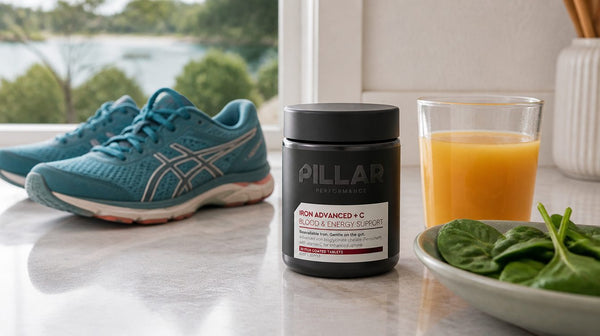
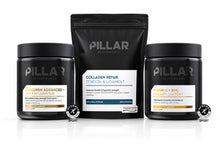
Pillar Performance Iron Advanced + C is built around these points. It pairs 23mg of elemental iron from Ferrochel, an iron bisglycinate chelate, with 80mg of vitamin C, and the brand describes it as much gentler on the stomach than traditional iron. It is Informed Sport certified, which matters if you are a tested athlete, and one bottle holds 30 serves.
A sample week
Here is an alternate-day routine for someone who trains in the evening.
| Day | Iron | Timing and notes |
|---|---|---|
| Monday | Yes | On waking with water and vitamin C, coffee two hours later |
| Tuesday | No | Normal breakfast and coffee |
| Wednesday | Yes | Same as Monday |
| Thursday | No | Normal day |
| Friday | Yes | Same as Monday |
| Saturday | No | Normal day |
| Sunday | Yes | Same as Monday |
Your own schedule should come from your blood results and your doctor. The pattern is what matters: spaced doses, vitamin C alongside, coffee and calcium kept out of the window.
Where NZ Supps fits
We stock iron alongside the rest of our everyday health range, including vitamins for filling other common gaps. If you like to keep your supplements from one brand, Pillar Performance covers iron, vitamin C, magnesium and more, all listed as Informed Sport certified.
While you are sorting your routine, check your vitamin D dosing too, another nutrient worth watching through a New Zealand winter.
FAQ
What is the best time of day to take iron? Morning is a good default for most people, ideally on an empty stomach or with a light, low-calcium breakfast. If you train, taking it in the morning or before your session makes sense, because a hormone called hepcidin rises after exercise and can reduce absorption for several hours.
Should I take iron with vitamin C? Yes, vitamin C helps your body absorb iron from supplements and plant foods. A glass of orange juice works, or choose a supplement that already includes it, like Pillar Iron Advanced + C with 80mg of vitamin C per serve.
How long after coffee can I take iron? Leave about two hours between your iron and any coffee or tea. The same goes for calcium supplements, dairy-heavy meals and antacids, which can also reduce how much iron you absorb.
Is it better to take iron every other day? It can be. A 2017 study in The Lancet Haematology found that taking iron on alternate days led to better fractional absorption than taking it on consecutive days. Talk to your doctor about which schedule suits your iron levels.
How do I stop iron supplements upsetting my stomach? Try a gentler form such as iron bisglycinate, take it with a small amount of food if needed, and consider alternate-day dosing. Pillar Iron Advanced + C uses Ferrochel, a bisglycinate chelate the brand describes as gentler on the stomach than traditional iron.