SHOP NOW, PAY LATER








 Informed Sport
 Informed Choice
 NSF Certified for Sport
 HASTA Certified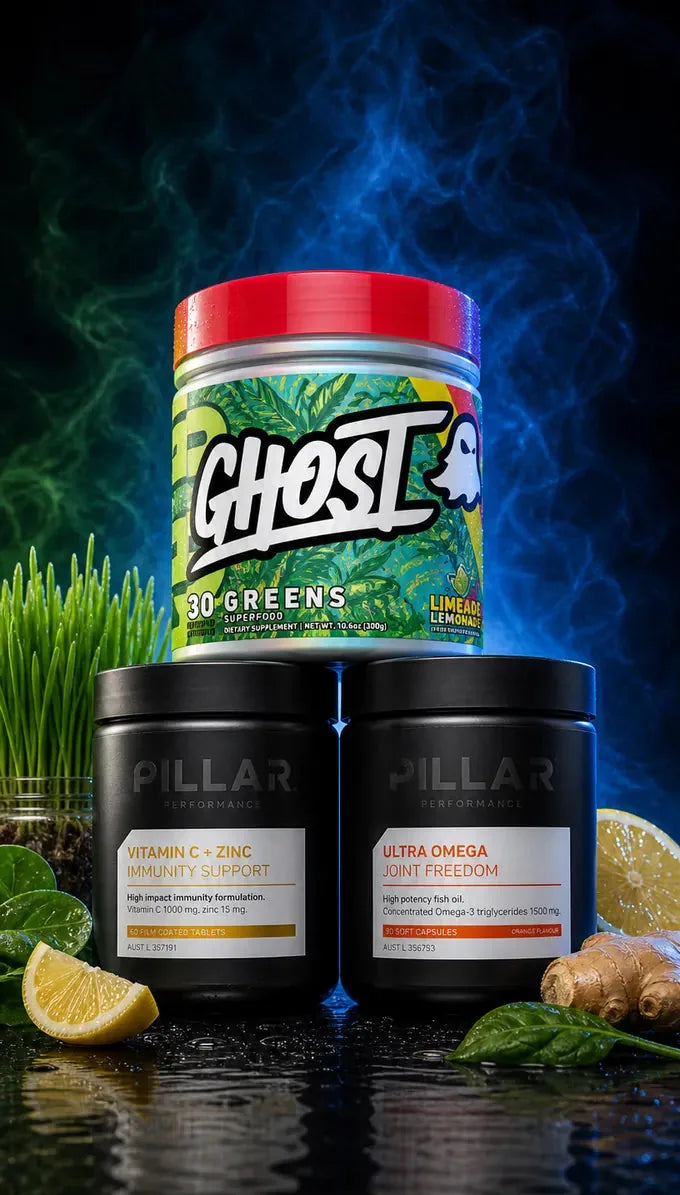

You are training more than ever, sleeping fine and eating well, yet your runs feel heavy and your legs never seem to bounce back. Low iron is one of the most common reasons athletes feel flat, and it is easy to miss. The honest answer is simple: test first, then supplement only if you are low.
The short answer
- Test before you take anything. Iron is one supplement you should not guess on. Too little hurts performance, too much can do harm.
- Who is most at risk: female athletes and endurance athletes. Research on athletes recommends regular screening for these groups (Sim et al. 2019).
- If you are low: choose a gentle, well-absorbed form such as iron bisglycinate (Ferrochel), taken with vitamin C.
- Food still matters: supplements top you up, but a diet with regular iron-rich foods keeps you topped up.
Why athletes lose iron
Iron helps build haemoglobin, the part of your red blood cells that carries oxygen to working muscles. When stores drop, your engine has less oxygen to work with. Athletes tend to lose more iron than inactive people, and the reasons stack up.
Sweat. You lose small amounts of iron in sweat. On its own it is minor, but over long, hot training blocks it adds up.
Foot-strike. Repeated impact, especially in running, can break down some red blood cells in the feet. It is one reason runners feature so often in low-iron stories.
Menstruation. Monthly blood loss is the biggest extra drain for many female athletes. Combine that with heavy training and the risk climbs fast.
Low intake. Athletes who eat little red meat, restrict calories or follow a plant-based diet can simply fall short on iron coming in. Hard training can also briefly reduce how much iron your gut absorbs in the hours afterwards, which makes a low intake harder to make up.
If you are building a big endurance block, the marathon supplement stack shows where iron fits alongside everything else.
Signs worth a blood test
Low iron creeps up slowly, so the signs are easy to put down to a hard week. Look out for:
- Tiredness that does not lift after a rest day or two
- Easy sessions suddenly feeling hard
- Getting out of breath sooner than usual
- Slower recovery between sessions
- Looking paler than normal, or feeling the cold more
These signs overlap with overtraining, poor sleep and low energy intake, which is why guessing does not work. If a few of these sound familiar, see your GP and ask for a blood test that includes ferritin, your iron stores.
Choosing an iron supplement
If your test shows low iron, three things matter when you pick a supplement: the form, the dose and what you take it with.
Form. Older iron salts work, but many people find them rough on the stomach, with nausea or constipation being common complaints. Iron bisglycinate, sold as Ferrochel, is well absorbed and generally gentler. That makes it easier to take consistently, and consistency is what rebuilds stores.
Dose. Follow your test results and any advice you get with them. More is not better with iron. A moderate daily dose you can stick with beats a big dose you stop taking after a week.
Vitamin C. Vitamin C helps your body absorb iron. That is why many athlete-focused products pair the two.
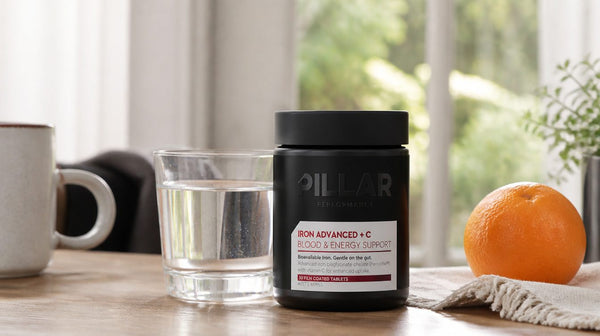
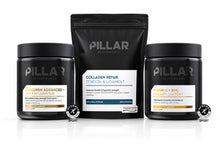
Pillar Iron Advanced + C ticks all three boxes. Each dose gives you 23mg of elemental iron as Ferrochel bisglycinate plus 80mg of vitamin C. It is Informed Sport certified, which matters if you compete in tested sport, and it is free from gluten, dairy, nuts, eggs and soy.
A quick note if you also take Pillar Vitamin C + Zinc through winter: zinc and iron can compete for absorption, so it makes sense to take them at different times of day. For the full routine, including food and drink that get in the way, read how to take iron so it absorbs.
Food first: NZ-friendly iron sources
Supplements are a top-up, not a replacement for good meals. Iron in food comes in two forms. Haem iron, from animal foods, is absorbed more easily. Non-haem iron, from plants and fortified foods, is absorbed less well but helps a lot when paired with vitamin C.
| Food | Iron type | Tip |
|---|---|---|
| Lean beef and lamb | Haem | A few meals a week makes a real difference |
| Mussels and other shellfish | Haem | An easy Kiwi option |
| Lentils, chickpeas and beans | Non-haem | Add capsicum, tomato or citrus for vitamin C |
| Spinach and silverbeet | Non-haem | Pair with a vitamin C food |
| Iron-fortified breakfast cereals | Non-haem | Check the label, and have fruit with them |
One easy habit: keep tea and coffee away from your iron-rich meals. Both can reduce how much iron you absorb.
Where NZ Supps fits
Once you know you are low, we make the next step simple. Pillar Iron Advanced + C sits in our everyday health range, alongside the rest of the Pillar health range. If you want to look at broader daily support, our greens and vitamins collection is a good place to browse.
Endurance athletes who sweat a lot should also get their hydration right, since sodium is the other mineral that runs down on long days. Our guide to sodium for endurance hydration covers that. For a full plan built around your goal, try the Find Your Stack quiz.
FAQ
Should athletes take iron supplements? Only if a blood test shows your iron is low. Athletes, especially female and endurance athletes, are at higher risk of running low, so screening makes sense. Taking iron when your levels are fine does not boost performance and can do harm.
What are the signs of low iron in athletes? Common signs include unusual tiredness, feeling flat in sessions that used to feel easy, getting out of breath sooner and taking longer to recover. These overlap with overtraining and poor sleep, which is why a blood test is the only way to know.
Which type of iron is easiest on the stomach? Iron bisglycinate, sold under the name Ferrochel, is well absorbed and tends to be gentler than older iron salts. Many people who gave up on iron tablets because of nausea or constipation do better on it.
Why is vitamin C paired with iron? Vitamin C helps your body absorb iron, especially the non-haem iron found in plants and supplements. That is why Pillar Iron Advanced + C includes 80mg of vitamin C with its 23mg of elemental iron.
Are female athletes more likely to be low in iron? Yes. Research on athletes flags female and endurance athletes as higher risk, mainly because menstruation adds to the iron lost through training. Regular screening is a sensible habit for this group.