SHOP NOW, PAY LATER










 Informed Sport
 Informed Choice
 NSF Certified for Sport
 HASTA Certified

ON Whey Isolate is Optimum Nutrition's 90%-plus protein-per-serving whey isolate tub, and that's the number that matters when you're comparing it to everything else on the shelf. The rest of this guide shows what that figure means on a label, in the tub, and after the shake.
You're probably standing in a supplement aisle or scrolling a product page, trying to work out whether the premium tub is doing a better job for your training, or just sounding fancier. The answer depends on the job you want the powder to do, because everyday protein, lean-cut support, post-training recovery, and lactose reduction aren't the same ask, even if they all end up in a shaker.
Table of Contents
- Why NZ Lifters Reach for ON Whey Isolate
- Whey Isolate and Concentrate Explained
- Inside an ON Whey Isolate Tub
- How ON Whey Isolate Stacks Up Against Other Options
- Reading the Label Before You Buy
- When ON Whey Isolate Is Worth the Premium
- Common Myths About Whey Isolate
- Choosing the Right Tub for Your Goals
Why NZ Lifters Reach for ON Whey Isolate
A small NZ gym fridge tells the story well. The black-and-gold tub gets pulled out fast, usually by someone who's already decided they want something cleaner than the bulk tub next to it, and quicker than cooking another meal. In that moment, ON Whey Isolate is being hired for a specific job, not praised in the abstract.
The four jobs it usually gets hired for
For some lifters, the job is simple. They need protein between meals without making lunch or dinner bigger than it already is. A scoop gives them a fast top-up that's easier than opening another container of yoghurt or forcing down extra chicken.
For others, the goal is tighter. During a lean-cut phase, every extra carb or gram of fat matters more, so isolate feels like a neater fit than a fuller dairy powder. It also appeals to people who want their post-training shake to be light, not a mini meal.
Practical rule: if you want a shake to feel like protein support, not dessert, isolate is usually the cleaner choice.
Then there's the recovery crowd. After a hard session, lifters often want something that mixes fast, sits light, and gets out of the way so they can eat properly later. Others buy isolate because standard whey tends to upset their stomach, and they're not interested in guessing which shake will bloat them.
Optimum Nutrition also tends to be a familiar name in NZ supplement shops, which matters more than people admit. The brand sits in the mix before anyone has even read the panel, so the question becomes whether this specific tub matches the job you've got in mind.
What this guide is really helping you decide
The point isn't to crown one powder as perfect. It's to help you decide whether ON Whey Isolate earns its space in your kitchen, your gym bag, or your travel kit, or whether you'd be better off keeping your money for food that does the same job more cheaply.
Whey Isolate and Concentrate Explained
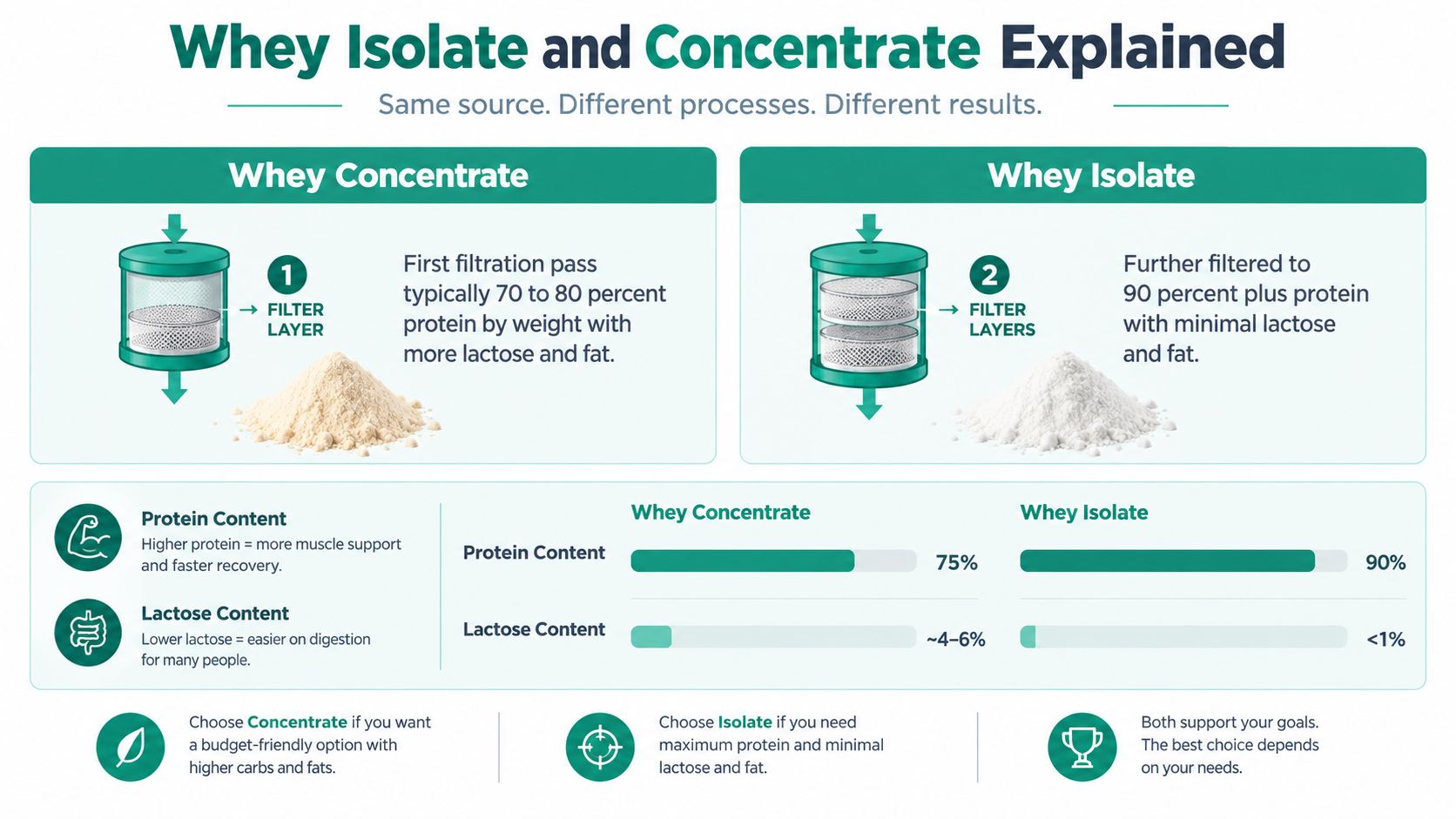
The easiest way to separate the two is filtration. Whey concentrate is the less processed version, usually sitting around 70 to 80 percent protein by weight, with more lactose, milk fat, and the flavour-carrying milk solids that make it taste fuller. Whey isolate goes through further filtering and usually lands around 85 to 95 percent protein, with most of the lactose and fat stripped away.
That extra filtration changes the way it behaves in your shaker. Isolate often looks finer, mixes clearer, and feels lighter on the tongue. Concentrate is usually a bit creamier, which plenty of people enjoy, but it brings more of the milk components along for the ride.
What the difference means in practice
If your stomach is fine with dairy, concentrate can be a perfectly sensible daily powder. If you bloat easily, or you want the lowest possible carbohydrate and fat load from the scoop, isolate makes more sense. That's why buyers often describe isolate as the more “purist” option, even though both products are still doing the same core job.
Both are complete proteins with the full essential amino acid profile. So this isn't a question of one building muscle and the other not building muscle. It's a question of purity, digestibility, and accompanying macros.
The label tells you how much protein you're buying. The filtration tells you what else comes with it.
ON Whey Isolate sits firmly at the high-purity end of that spectrum, which is why it's usually chosen when the buyer cares more about protein density than creamy mouthfeel. If you want the broader trade-off picture, the NZ Supps comparison on whey isolate vs concentrate is a useful companion read.
A quick visual from a shaker perspective helps too. The attached video gives a simple consumer view of how these powders differ in everyday use.
Inside an ON Whey Isolate Tub
A typical ON isolate label starts with the number most glance at first, serving size. That scoop is usually around 30 to 31 grams, and the protein content sits above 25 grams per serve, which is why the powder is described as being about 90 percent protein-per-serving. The rest of the scoop is the part buyers often forget to inspect.
What the panel is telling you
The carbohydrate and fat lines matter because they tell you how “clean” the shake really is. In a leaner diet, low carb and low fat numbers are the point, not a side note. If you're trying to keep calories tight, a protein powder with very little extra baggage is easier to fit around real food.
The amino acid panel is where label literacy gets sharper. Leucine matters more than a vague “high protein” claim because leucine is the amino acid most closely tied to muscle protein synthesis signalling. Total BCAA content is nice to see, but leucine per scoop is the figure that tells you how much trigger you're getting.
A typical tub will also list ingredients beyond whey itself. That usually includes flavouring, sweeteners such as sucralose or acesulfame-K, emulsifiers like soy or sunflower lecithin, and sometimes thickeners such as xanthan gum. Those additions help the powder mix better and taste smoother, but they don't change the protein quality.
If the scoop is for recovery, low-bloat feeding, or a precise meal replacement, read the protein, carb, fat, and leucine lines first. Taste comes after function.
| Label Line | Typical Value | Why It Matters |
|---|---|---|
| Serving size | Around 30 to 31 grams | Tells you how much powder you're actually measuring |
| Protein per serve | Above 25 grams | Shows the tub is highly protein-dense |
| Carbohydrate | Low grams | Helps keep the shake suitable for tighter calorie targets |
| Fat | Close to 1 gram or less | Supports a leaner macro profile |
| Leucine | Listed on the amino panel | Helps judge the muscle-signal value of the scoop |
| BCAA total | Listed on the amino panel | Gives a broader amino acid picture, but doesn't replace leucine |
| Sweeteners and flavouring | Sucralose, acesulfame-K, or similar | Improves taste without changing protein quality |
| Lecithin or gum | Soy, sunflower lecithin, or xanthan gum | Helps mixability and texture |
Each of those lines maps back to the four jobs from the opening. If you want everyday protein, the serving size and protein grams matter most. If you're cutting, the low carb and fat lines matter. If recovery is the goal, leucine and mixability deserve a closer look. If lactose reduction is the reason you're shopping, the ingredient panel and allergen statement matter most.
How ON Whey Isolate Stacks Up Against Other Options
The better comparison is not “which powder is best”, but which powder fits the way you train and eat. ON Whey Isolate sits between basic budget whey and some of the more specialised tubs on NZ shelves, so the clearest way to judge it is by the job you want it to do.
A shopper checking the label first usually starts with serving size, because that number sets the protein maths. ON Whey Isolate tends to suit people who want a shake that does more than fill a glass. It is built for everyday protein, leaner cuts, post-training recovery, and lower lactose intake.
Side by side without the fluff
| Option | Protein per serve | Leucine per serve | Lactose | Price per 30 g protein (NZD) | Best for |
|---|---|---|---|---|---|
| ON Whey Isolate | High, typically above 25 grams per scoop | Strong, because isolate is protein-dense | Low | Varies by retailer and flavour | Lean cuts, recovery, low-lactose use |
| Standard whey concentrate | Usually lower than isolate | Solid, but less protein-dense per scoop | Higher than isolate | Usually lower than isolate | Everyday use, value buying, general bulking |
| Plant-based isolate | Often lower in leucine density than whey | Lower than whey on average | Dairy-free | Varies widely | Dairy-free diets, vegan buyers |
| Premium grass-fed NZ isolate | Similar purity, depending on formula | Similar if protein content is similar | Low | Usually higher | Provenance, local sourcing, premium positioning |
ON isolate usually wins when the buyer wants high protein density without paying for extra branding around sourcing. It also tends to beat plant powders on amino acid completeness and leucine density, which matters when the shake is doing real recovery work rather than just topping up a meal.
Plant-based isolate still has a clear place. It works for dairy-free diets and vegan buyers, but the amino profile is different, so the protein load needed to match whey can be harder to judge from the front of the tub. That is where label literacy matters more than flavour claims.
A premium grass-fed NZ isolate makes more sense when local origin, traceability, or farm story is the main buying trigger. That matters in New Zealand, where dairy protein is tied to an export-led industry and origin cues carry weight with shoppers who want local supply chains and higher-specification ingredients. For shoppers comparing value and not just labels, NZ Supps also publishes a broader whey protein 5 lb guide that can help frame tub size and buying frequency against training volume.
Reading the Label Before You Buy
The cleanest way to shop is to treat the tub like a checklist, not a promise. A front label can make almost any powder look elite, but the back panel gives you the actual job description.
A fast routine you can use in the aisle
- Check the serving size first. If the scoop is huge, the protein number can look better than the formula really is.
- Work out the protein percentage. Divide protein grams by scoop size. A tub that delivers most of the scoop as protein is usually closer to isolate territory.
- Scan for amino claims. If the panel lists leucine and BCAAs, read them separately. A high BCAA headline doesn't automatically tell you much about muscle signalling.
- Look at carbs and fat. If the powder is supposed to be lean, those numbers should stay low.
- Read the ingredient order. The first ingredients carry the most weight in the formula, so order matters.
- Watch for sweeteners and thickeners. These aren't automatically bad, but they tell you whether the product is built for taste, texture, or maximum purity.
The quiet issue that trips people up is amino spiking, where cheap added amino acids can inflate protein-related numbers on paper. A transparent label should make it easy to see what the tub is built from, not force you to guess.
The allergen statement matters too. Under FSANZ rules, you'll see whether the product is flagged for milk or other allergens, and that's more useful than hoping your stomach gives you feedback later. If you're lactose-sensitive, don't assume every isolate will behave the same.
Price per gram of protein is the honest comparison number. Tub price alone can be misleading if one product is mostly filler and the other is mostly protein.
If you want a deeper look at label trickery and blend language, NZ Supps has a useful explainer on what a proprietary blend means. That kind of reading habit matters because the best-looking front of tub is rarely the most useful part.
When ON Whey Isolate Is Worth the Premium
ON Whey Isolate earns its price when the buyer needs the things isolate is good at. That means 90%-plus protein per scoop, low lactose, and a shake that works cleanly during travel, contest prep, or calorie-controlled phases. If that's your situation, the premium is doing a real job.
For a lactose-sensitive lifter, the cost makes sense because the alternative isn't “same thing, cheaper”. It's often “a powder that leaves you bloated” or “a powder you don't want to use consistently”. For a cutter who wants to hit a precise protein target without dragging in extra carbs or fat, isolate is easier to place into the day.
For everyone else, the value case is weaker. If you're a student, a casual gym-goer, or a mass-gainer who cares more about total calories than ultra-clean macros, concentrate will usually cover the same basic protein need for less money. That money might do more work as actual food, or even go straight back into your training budget.
The premium here is not magic muscle gain. It's convenience, digestibility, and a tidier label. If those are the constraints you're working with, the tub earns its place. If they aren't, the cheaper option is often the smarter one.
Common Myths About Whey Isolate
Myth one is that more protein per serve automatically means better results. It doesn't. You still need to hit your daily protein target, and a sensible total intake across the day matters more than chasing the biggest number on the panel.
Myth two is that isolate is lactose-free. It's usually much lower in lactose because of the extra filtration, but “lower” is not the same as “zero”. People with strong sensitivity still need to test their own tolerance rather than trust a marketing shortcut.
The rest of the label matters too
Myth three is that isolate builds noticeably more muscle than concentrate. Both are complete proteins, and both can work well when total daily protein and training stimulus are in place. The difference is mainly purity and macro load, not some hidden anabolic upgrade.
Myth four is that additives mean the tub is full of cheap filler. Sweeteners, lecithin, and thickeners are there for taste, texture, and mixability. They're worth noticing, but they're not the same thing as protein quality.
The evidence-backed position is simpler than the hype. Choose isolate when you need a cleaner macro profile, better digestive tolerance, or a more precise scoop. Choose concentrate when you want decent protein for less money and you're not chasing the leanest possible formula.
Choosing the Right Tub for Your Goals
A good tub should match the job you want it to do. For everyday protein, concentrate often makes sense if dairy sits well and you are not chasing the leanest label. For lean muscle, lower carbs and fat, or post-training recovery without a heavy shake, ON Whey Isolate is the cleaner fit.
If dairy usually bothers you, isolate is often the first whey option worth trying before you write whey off completely. If budget matters more, concentrate usually gives better protein-per-dollar and still covers the basics for casual lifters. If you care about local sourcing or grass-fed options, that may point you towards a different tub again.
Use the label like a checklist, not a guess. Ask yourself:
- Goal: bulk, maintenance, or a cut?
- Tolerance: does dairy sit well, or do you bloat?
- Transparency: can you see protein grams, leucine, carbs, fat, and ingredient order clearly?
- Value: are you comparing tub price, or price per gram of protein?
- Taste: will you keep using the flavour you buy?
If you are already planning a higher-protein day, AI Meal Planner's 200g protein plan can show where a scoop fits alongside real food instead of replacing it. That is the right role for powder, support for the day rather than the whole plan.
For extra comparison context, NZ Supps also keeps a practical whey protein guide alongside its product listings. Use the label routine from earlier, compare the serving math, and choose the tub that fits your training block and your tolerance.