SHOP NOW, PAY LATER










 Informed Sport
 Informed Choice
 NSF Certified for Sport
 HASTA Certified

You're standing in the supermarket freezer aisle, looking for a lighter dessert. One tub says sugar free, another says no added sugar, and a third says low sugar. They all look like sensible choices, yet the labels may tell very different stories about sweetness, carbohydrates, calories, texture and digestive comfort.
Sugar free ice cream can be useful, but the phrase alone doesn't tell you whether a product suits your diet. The better approach is to treat the front label as an invitation to investigate. Check the nutrition panel, identify the sweetener, consider the serving size and decide whether the lower sugar content matters for your goal.
New Zealand shoppers have a useful local reference point. New Zealand nutrition guidance advises choosing foods with less than 10 g of sugar per 100 g. That makes it easier to move beyond vague “better for you” language and compare products on a consistent basis.
This guide explains how sugar free ice cream is formulated, why sweeteners affect the body differently, what happens to texture when sugar is removed and how to read the label without getting lost in unfamiliar ingredient names. It also considers everyday eating, weight management, diabetes-related decisions and keto-style diets, while keeping one principle in view: a useful choice is one that fits your body, preferences and portion habits.
Table of Contents
- Introduction to Sugar Free Ice Cream Without the Confusion
- What Sugar Free Ice Cream Really Means
- Common Sweeteners and How They Affect Your Body
- Why Texture and Flavour Feel Different
- How to Read Labels and Spot Hidden Sugars
- Best Use Cases for Diet Diabetes and Keto Goals
- Choosing Your Next Tub With Confidence
Introduction to Sugar Free Ice Cream Without the Confusion
A shopper called Maya reaches for a chocolate tub labelled no added sugar. She assumes it must be the same as sugar free ice cream, then notices milk solids, sweeteners and carbohydrate values on the back. Nearby, a reduced-sugar vanilla product has a familiar ingredient list but a much higher sugars figure than she expected.
That confusion is understandable. Sugar claims describe different things, and frozen desserts need more than sweetness to work well. Sugar contributes to flavour, but it also helps control freezing, softness and the way ice cream melts in your mouth. Remove it and the manufacturer has to rebuild some of those qualities with other ingredients.
The question behind the claim
People choose sugar free ice cream for different reasons. Someone managing blood glucose may want less rapidly available sugar, while a person following a low-carbohydrate plan may be checking total carbohydrate and fibre. Another shopper may want a dessert that feels easier to include in an everyday eating pattern.
None of those goals makes sugar free ice cream automatically healthy or unhealthy. A product can contain little sugar while still being rich in fat, energy or carbohydrates from other ingredients. It can also taste excellent but cause digestive discomfort if the sweetener combination doesn't suit you.
The practical test: Don't ask only whether the tub is sugar free. Ask what replaced the sugar, how much you'll eat and what the full nutrition panel says.
A local market with changing preferences
New Zealand's wider ice cream market was valued at USD 338.5 million in 2025 and is projected to reach USD 473.52 million by 2034, with a projected 3.80% CAGR from 2026 to 2034, according to New Zealand ice cream market data. The same source identifies low-sugar and high-protein variants as gaining traction among health-conscious consumers.
Plant-based ice cream sales in New Zealand also grew by approximately 11% in 2025, reflecting a broader shift towards products aligned with health and dietary preferences, as reported in the same New Zealand market overview. These changes give shoppers more choice, but more choice also makes label literacy more valuable.
By the end of this guide, you should be able to compare tubs calmly. You'll know when sugar reduction is meaningful, when a sweetener needs caution and when a regular ice cream served in a modest portion may be the more enjoyable option.
What Sugar Free Ice Cream Really Means
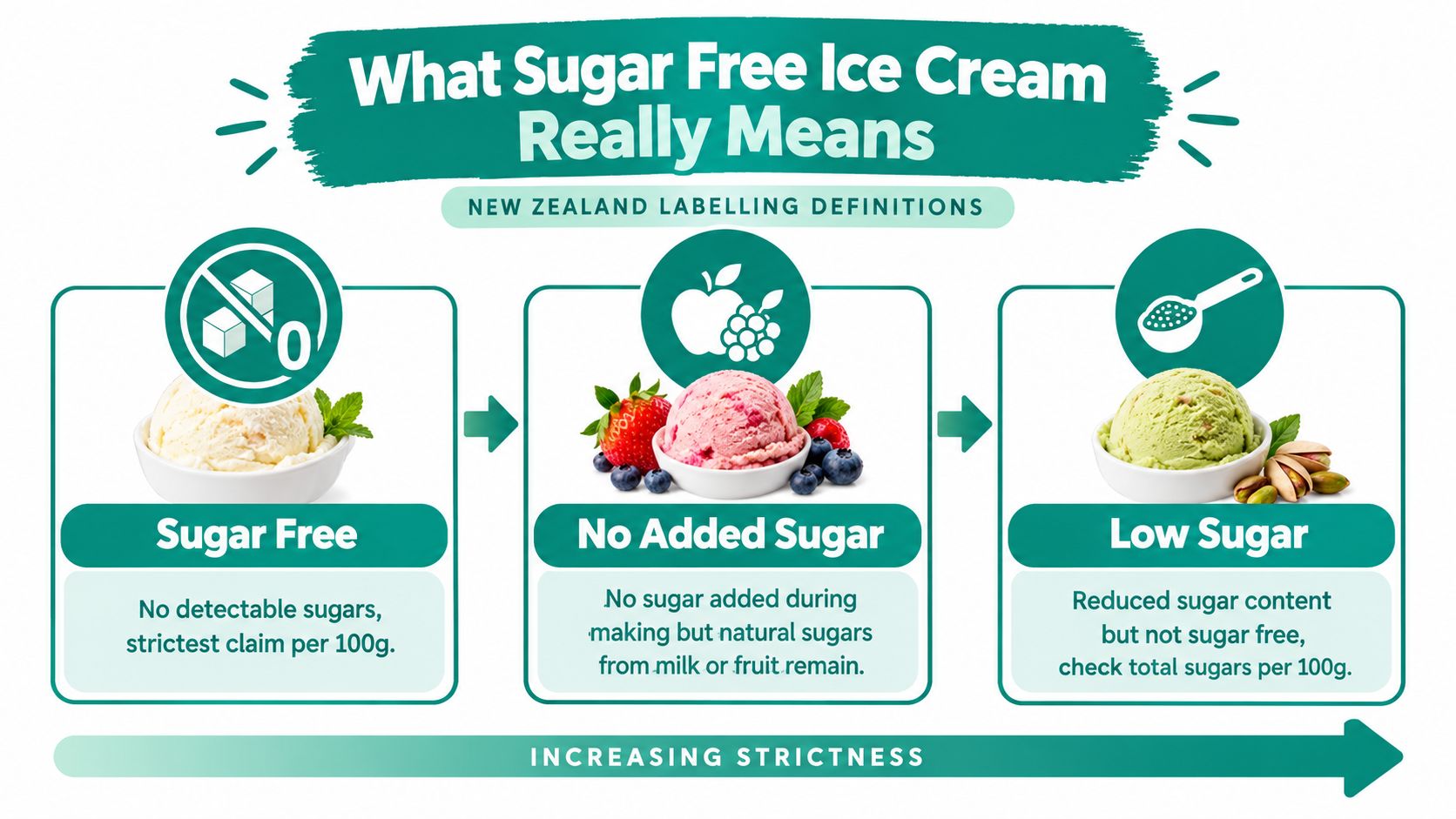
The words on the front of a tub are not interchangeable. Sugar free, no added sugar and low sugar describe different formulation ideas, so start by separating them before judging whether a product suits you.
Sugar free is the strictest-sounding claim, but you still need to inspect the nutrition panel and ingredient list. A product labelled no added sugar may contain natural sugars from milk, fruit or other ingredients. Low sugar means the product contains less sugar than a relevant comparison or meets a defined threshold, but it isn't necessarily sugar free.
The simplest way to think about the distinction is this:
- Sugar free: The product is formulated to contain no detectable sugars or only an extremely small amount under the applicable claim rules. Check the panel rather than relying on the name.
- No added sugar: The maker hasn't added sugar during production, but naturally occurring sugars can remain.
- Low sugar: The product contains a reduced amount of sugar, but the total may still be meaningful in your usual serving.
Why sugar changes the whole recipe
Sugar behaves like scaffolding in ice cream. It supports sweetness, but it also affects the freezing point and helps keep the mixture from becoming a solid block of ice. It contributes dissolved material that influences ice crystal formation, softness and melt.
When a manufacturer removes sucrose, the recipe needs another way to provide some of that structure. Sweeteners may supply sweetness, while fibres, milk solids, fats, gums or other bulking ingredients contribute body. The final result can therefore be creamy, icy, dense, airy or slightly gummy depending on the balance.
This is why a sugar free label doesn't predict the eating experience. Two tubs can use different sweetener systems and feel completely different on the spoon.
Per 100 g is the fairest starting point
Portion sizes are easy to manipulate. A small stated serve can make a product appear lower in sugar even when a normal bowl contains more than you expected. Comparing sugars per 100 g gives you a consistent baseline across brands and flavours.
New Zealand guidance recommends choosing foods with less than 10 g of sugar per 100 g, as explained by Health New Zealand's guidance on reducing sugar. Use that threshold as a practical screening tool, not as a guarantee that a product is suitable for every diet.
The next question is what creates sweetness after sugar leaves the recipe. That answer matters for flavour, blood glucose response, calorie intake and gut comfort.
Common Sweeteners and How They Affect Your Body
Sweeteners fall into several families, and each family solves a different recipe problem. Some mainly provide sweetness, some add bulk and some help create a softer frozen texture. The most useful comparison is not “natural versus artificial”. It's what the ingredient does and how you respond to it.
Sugar alcohols
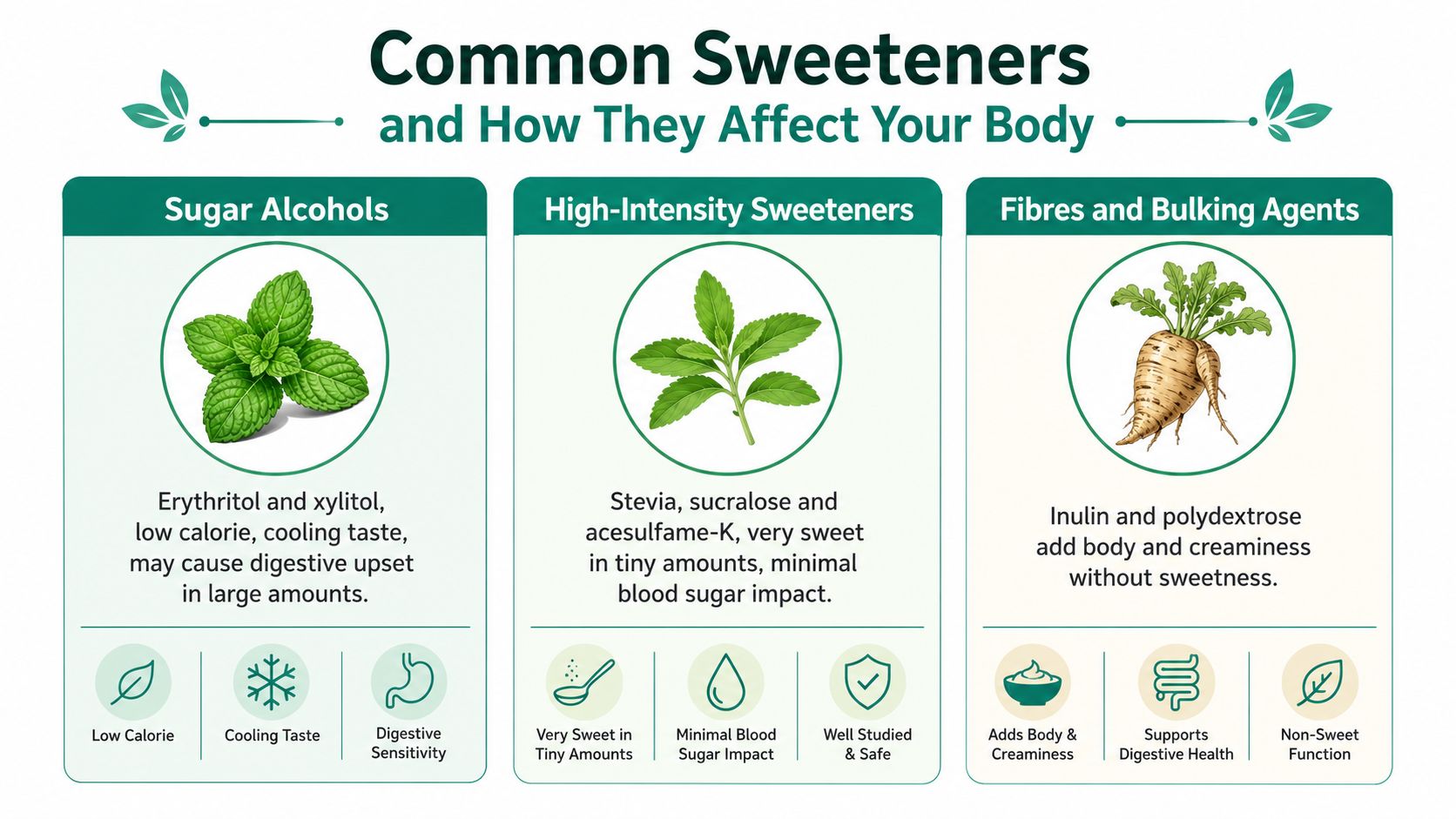
Erythritol and xylitol are sugar alcohols, also called polyols. They can provide sweetness with fewer available calories than ordinary sugar, although their effects and tolerability differ.
Erythritol is popular in low-carbohydrate products because it generally has little effect on blood glucose. It can create a cooling sensation on the tongue and may become noticeably crystalline in a frozen recipe if the formulation isn't balanced. Xylitol has a more sugar-like sweetness and can help with softness, but larger amounts may cause bloating or loose stools for some people. Xylitol is also highly toxic to dogs, so keep products containing it away from pets.
Tolerance is personal. A small serving may be comfortable, while repeated servings or a product containing several polyols may not be. If you're new to sugar free ice cream, begin with a modest portion and see how your body reacts.
For a broader explanation of how polyols behave in food, this guide to sugar alcohols in protein bars offers useful label-reading context.
High-intensity sweeteners
Stevia, sucralose and acesulfame-potassium are intensely sweet, so manufacturers can use very small quantities. They're useful when a recipe needs sweetness without adding much bulk or sugar, and they typically have minimal direct effect on blood glucose at the amounts used in foods.
Their sensory profiles vary. Stevia can leave a herbal or bitter finish for some people, while sucralose often tastes closer to sugar. Acesulfame-potassium is frequently combined with another sweetener to create a more rounded flavour.
New Zealand food-supply research found non-nutritive sweeteners in 5% of packaged foods and beverages in 2019, compared with 3% in 2013. The New Zealand study identified stevia, sucralose and acesulfame-potassium among the most common sweeteners. That prevalence helps explain why sweetener blends can be familiar in packaged foods while still being a niche choice in frozen desserts.
Fibres and bulking agents
Inulin and polydextrose don't function like high-intensity sweeteners. They add body, solids and sometimes a smoother mouthfeel, helping replace some of the physical role sugar played in the recipe. They may also contribute fibre, but that doesn't make a dessert unlimited or nutritionally equivalent to a high-fibre whole food.
Some fibres ferment in the gut. A product that looks gentle on the label can still cause wind or discomfort if you're sensitive to fermentable ingredients. Read the full ingredient list, especially if you already know that inulin or similar fibres don't agree with you.
Blends are common because no single ingredient perfectly recreates sugar. One sweetener may provide the main sweetness, another may soften the texture and a fibre may add creaminess.
Read the ingredient list as a recipe map: The first ingredients usually describe the product's main structure, while sweeteners and fibres reveal how the maker replaced sugar's missing functions.
Why Texture and Flavour Feel Different
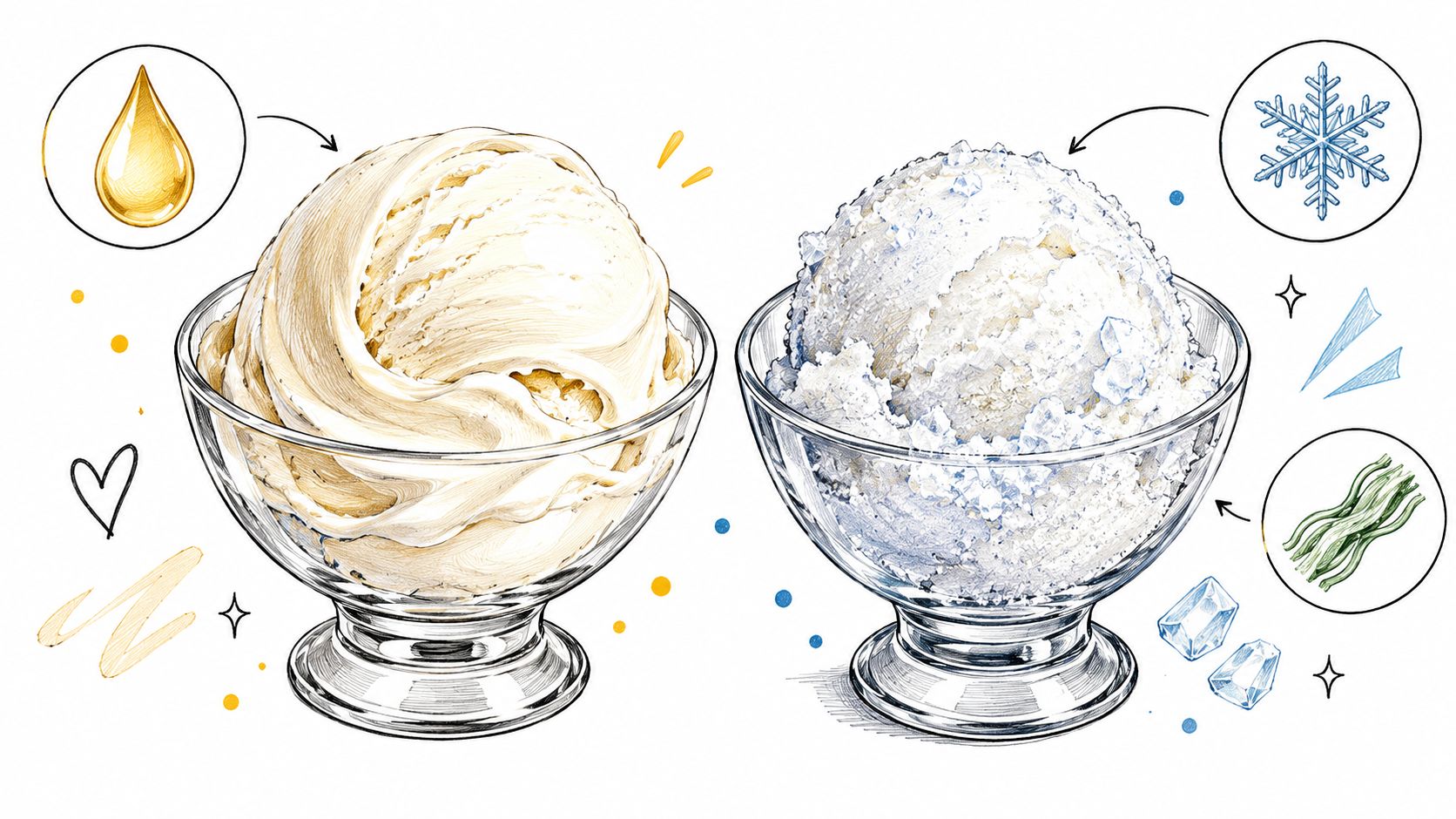
Sugar free ice cream can taste different because sugar does more than make a dessert sweet. It affects how much water freezes, how large the ice crystals become and how quickly the scoop softens. Once sugar is removed, the manufacturer has to manage those factors through fat, milk solids, fibres, gums, air and alternative sweeteners.
That's why one product may feel icy and another may feel dense or slightly chewy. An icy texture usually suggests larger ice crystals or insufficient control of the water phase. A gummy texture can come from heavy use of bulking ingredients or stabilisers. A very airy tub may rely on more incorporated air, which changes how much flavour reaches your palate in each spoonful.
What to expect from the first scoop
A tub without much sugar may freeze harder than a conventional product. That doesn't automatically mean the recipe is poor. The freezer temperature, container depth and time since purchase also affect scoopability.
Take the tub out briefly before serving and use a sturdy spoon. Don't leave it sitting out for a long period, especially if you plan to refreeze it. Repeated melting and refreezing encourages ice crystal growth and can make the texture rougher.
Flavour can shift too. Sugar rounds out bitterness and carries flavour across the tongue, so chocolate, coffee, citrus or botanical notes may seem sharper when sugar is reduced. Sweeteners can add their own effects, such as the cooling sensation associated with some sugar alcohols or the lingering finish associated with some high-intensity sweeteners.
Creaminess is a formulation achievement
Fat gives richness, but it doesn't solve every texture issue. Fibres and stabilisers can help bind water, while milk proteins contribute body. A well-made product balances these components so the ice cream feels smooth rather than heavy.
The same principle applies when comparing ice cream with sorbet. A fruit-based frozen dessert, such as this sorbet wild berries photo from IFM Gourmet Food Store, can look bright and refreshing, but its texture depends heavily on fruit solids and water management.
Serving adjustment: If a sugar free tub feels firm, give it a short tempering period and scoop from the surface evenly. The goal is to soften the portion you'll eat, not the whole container.
A different mouthfeel isn't necessarily a defect. It's evidence that the recipe has traded one set of structural ingredients for another. Judge the product by whether the texture is pleasant, the flavour is satisfying and the label fits your needs.
How to Read Labels and Spot Hidden Sugars
A reliable label check takes only a few passes. Start with the nutrition panel, then inspect the ingredients and finally compare the product with a similar flavour. Ignore the front-of-pack claim until you know what the tub contains.
Use this four-part scan
- Find sugars per 100 g. This is the cleanest comparison point because it removes serving-size tricks. If you're using the New Zealand public-health threshold, look for a figure below 10 g per 100 g, based on Health New Zealand's sugar guidance.
- Check the serving size. A nutrition panel may present values per serve as well as per 100 g. Compare the stated serving with the amount you'd realistically put in a bowl, then calculate mentally whether the claimed reduction still matters.
- Read the sweetener names. Look for erythritol, xylitol, stevia, sucralose, acesulfame-potassium, allulose, monk fruit, inulin or polydextrose. Each points to a different balance of sweetness, bulk, texture and digestive tolerance.
- Review total carbohydrate and fibre. Sugar free doesn't mean carbohydrate free. Milk ingredients, starches, fruit components and bulking agents can all contribute carbohydrate, so people following keto diets need the complete panel rather than the front label.
Maltodextrin and glucose syrup solids deserve particular attention because they can add carbohydrate without sounding like table sugar. Fruit purée and concentrated dairy ingredients may also contribute natural sugars, even when the packaging says no added sugar.
A real New Zealand comparison
Zilch Chocolate contains 4.0 g sugars per 100 g, which sits below the practical New Zealand threshold. A standard Pams vanilla ice cream example contains 19.1 g sugars per 100 g. That means the Zilch example has approximately 79% less sugar density than the Pams reference product, as documented alongside New Zealand sugar-reduction guidance.
| Product Example | Sugars per 100 g | Meets Less Than 10 g Threshold |
|---|---|---|
| Zilch Chocolate | 4.0 g | Yes |
| Pams standard vanilla ice cream example | 19.1 g | No |
Zilch is a local no-added-sugar line from New Zealand Natural Ice Cream Limited, and it explicitly markets itself as reduced-fat and no-added-sugar through the Zilch product information. The comparison is useful because it shows why sugar density matters more than a vague impression that one dessert is “lighter”.
Label rule: A product earns your attention when the sugars figure, carbohydrate profile, ingredients and realistic portion all support your reason for buying it.
For practical strategies around cravings and food routines, this resource on diet and lifestyle for sweet cravings can sit alongside label checking. It shouldn't replace the panel on the tub, but it may help you consider why and when you reach for a sweet food.
For another label-focused example, see the explanation of sugar versus sugar-free electrolytes.
Best Use Cases for Diet Diabetes and Keto Goals
Sugar free ice cream is most useful when it solves a specific problem. If your goal is to enjoy dessert, you may prefer a smaller serve of regular ice cream. If your goal is to reduce sugar exposure, manage carbohydrate intake or fit a treat into a structured eating plan, a carefully chosen sugar free product may be a more practical swap.
Weight management
Lower sugar doesn't automatically mean lower energy. Fat, cream, nuts, chocolate pieces and bulking ingredients can keep a frozen dessert calorie-dense even when the sugars line is low.
Use the product as a planned treat rather than an unlimited food. Check energy per 100 g, compare the serving with your usual bowl and consider whether the taste is satisfying enough to stop at that portion. A product that leaves you searching for more may offer less practical value than a smaller portion of regular ice cream you enjoy.
Diabetes-related decisions
A lower-sugar product may help reduce the amount of sugar in a serving, but it doesn't guarantee a predictable blood glucose response. Total carbohydrate, portion size, milk sugars, starches and the rest of the meal all matter.
If you use glucose-lowering medication or insulin, your own clinical plan should guide food decisions. Try unfamiliar products cautiously, especially when they contain polyols or a blend of fibres and sweeteners. A dietitian or diabetes care team can help you interpret the label in relation to your treatment.
Pairing a small serving with a meal that includes protein or fibre may make the eating experience more satisfying, but it doesn't cancel the dessert's carbohydrate or energy content.
Keto goals
Keto shoppers need to look beyond the phrase sugar free. Check total carbohydrate, fibre and the specific sweetener system. Erythritol and stevia-based products may fit some low-carbohydrate plans, while ingredients such as maltodextrin, syrup solids, fruit purée or certain polyols may change the calculation.
Net-carb calculations also depend on the convention being used and the way the manufacturer reports fibre and sugar alcohols. Follow your own plan consistently rather than assuming every product uses the same method.
This guide to no-sugar electrolyte powder illustrates the same principle in another category. “No sugar” is a useful starting claim, but the rest of the formula still determines whether it suits your goals.
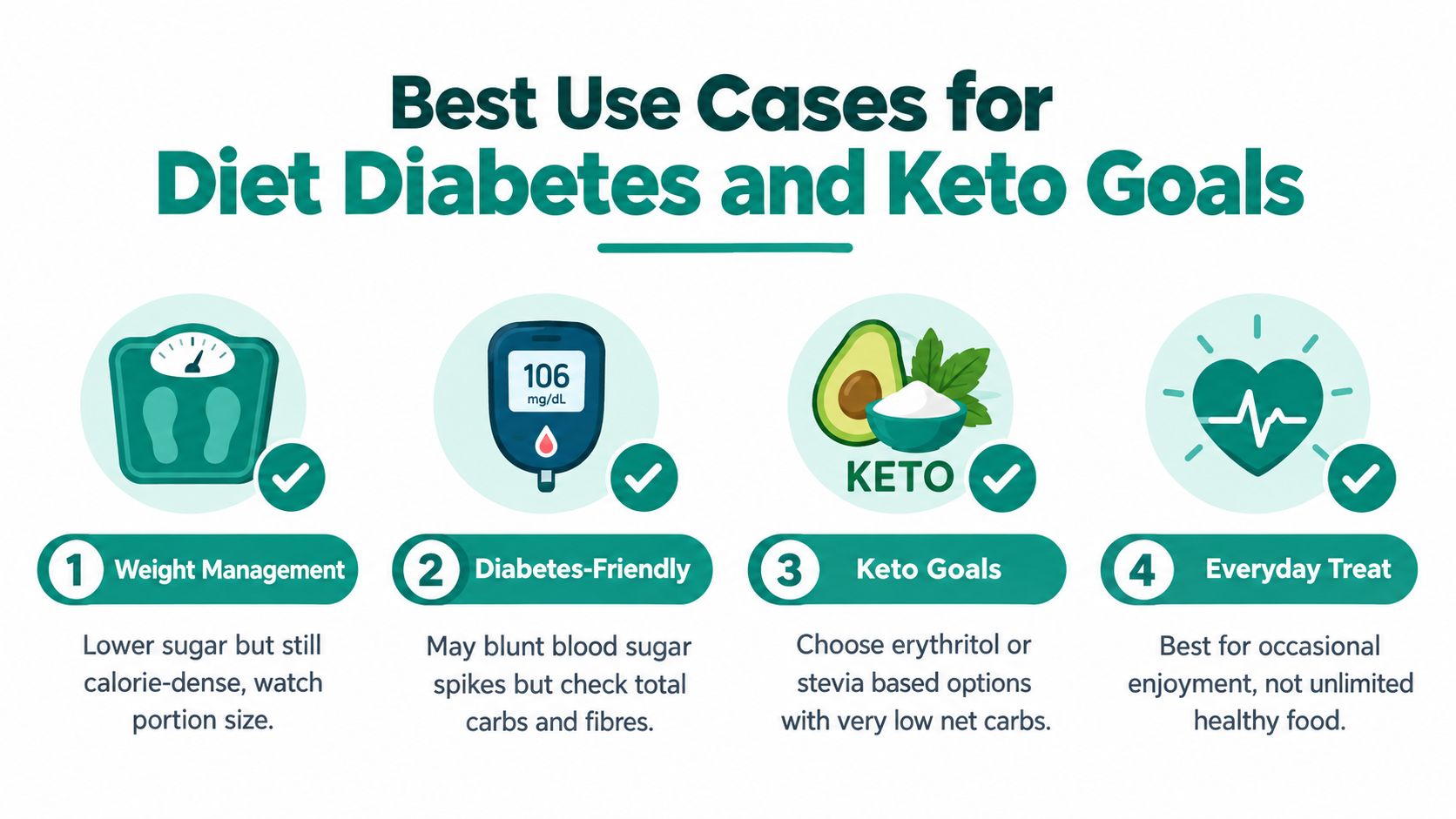
A simple decision filter
- If sugar reduction is your priority: Compare sugars per 100 g and choose a product that creates a meaningful difference.
- If digestive comfort matters: Examine polyols and added fibres, then test a modest serve.
- If keto is the goal: Check total carbohydrate, fibre and sweetener type rather than trusting the front claim.
- If enjoyment is the goal: Choose the product with the best flavour and texture for a portion you can eat comfortably.
Sugar free ice cream is a tool, not a health halo. It works best when the label matches the reason you're choosing it.
Choosing Your Next Tub With Confidence
Start with the nutrition panel, not the marketing badge. Look for the sugars per 100 g, compare it with the less-than-10-g threshold used in New Zealand guidance and check whether total carbohydrate or energy changes the picture. Then read the ingredients to identify whether the recipe relies on sugar alcohols, high-intensity sweeteners, fibres or a combination.
Your first tub should be an experiment in fit. Choose a flavour you already enjoy, serve a modest amount, notice how the texture softens and pay attention to digestive comfort afterwards. If the product tastes satisfying and its label supports your goal, it has earned a place in your routine. If it leaves you disappointed or uncomfortable, try a different formulation instead of assuming all sugar free ice cream is the same.
Local history shows that sugar reduction in New Zealand ice cream isn't a passing idea. Zilch represents a modern no-added-sugar option, while a New Zealand industry story from 2003 described a diabetes-friendly product with sugar reduced to 10 g per 100 g serve, as documented through Zilch's New Zealand product background. The category has evolved, but the shopper's task remains straightforward: compare the label with the purpose.
For more ideas beyond the freezer aisle, browse these low sugar dessert recommendations from Rip Van. Use them for inspiration, then apply the same checks for ingredients, nutrition and portion size.
The best choice isn't the tub with the loudest claim. It's the one whose sweetener profile suits your digestion, texture suits your expectations and sugar density suits your everyday goal.
NZ Supps makes ingredient comparison easier across protein, hydration, wellness and weight-management products, with clear labels and per-serve information for New Zealand shoppers. Visit NZ Supps to compare transparent formulas and build a stack that fits your nutrition goals.