SHOP NOW, PAY LATER













 Informed Sport
 Informed Choice
 NSF Certified for Sport
 HASTA Certified

Menopause brings changes most women feel in the gym long before anyone talks about them. Strength dips, recovery slows, and keeping muscle takes more work than it used to. Creatine is one of the most researched supplements there is, so it is fair to ask whether it can help. Here is what the studies actually show, and what is still hype.
The short answer
- Creatine may support muscle and strength in midlife women, and the evidence is strongest when you pair it with resistance training.
- Bone and mood research is promising but early. Treat these as possible bonuses.
- Take 3 to 5g of creatine monohydrate a day. No loading needed.
- Expect a little water weight at first. It is stored in muscle and usually settles.
- Hate powder? Creatine gummies give you the same daily dose.
Why menopause changes muscle and bone
Oestrogen does more than most people realise. As levels drop through perimenopause and menopause, women tend to lose muscle and bone faster than before. That is why strength can slide even when your training stays the same.
Muscle is not just about looks. It keeps you strong, supports your joints and helps with balance as you age. The single best tool to protect it is lifting weights. The question is whether creatine makes that lifting work a bit harder for you.
What the research shows
The most useful summary is a 2021 review in Nutrients by Smith-Ryan and colleagues. It looked at creatine in women's health across the lifespan, including the years around menopause.
Here is the honest version of what it found:
- Muscle and strength: this is where the evidence is strongest. Creatine may support gains in lean mass and strength, especially alongside resistance training. Creatine without training does much less.
- Bone: some studies suggest creatine combined with training may support bone health in older women. The evidence is mixed, so treat it as a maybe.
- Mood and brain: there is early research on creatine and mood. It is interesting, but it is not strong enough to promise anything.
So the realistic takeaway is this. Creatine is a training aid. It may help you get more out of the work you put in, and that work is what protects muscle and bone. It is not a treatment for hot flushes, brain fog or any other menopause symptom.
If you are over 50 and want the wider picture, our guide to creatine for older adults covers the research on ageing muscle for both men and women.
Dose and form
Keep it simple. The International Society of Sports Nutrition supports 3 to 5g of creatine monohydrate a day. You do not need a loading phase. Your muscles top up over a few weeks at the normal dose.
Monohydrate is the form with the most research behind it, and it is also the cheapest. Here are three good ways to take it:
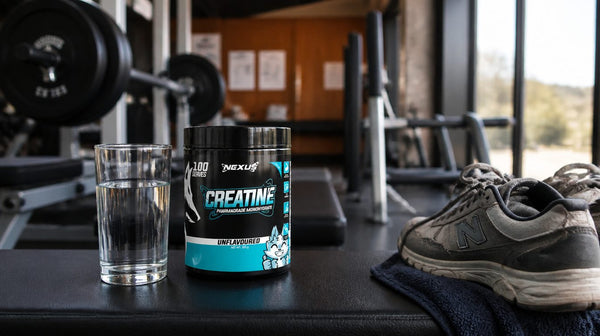
- Nexus Creatine 150g: a pure, micronised monohydrate with nothing added. A small tub is a low-risk way to start.
- EHPlabs Crea-8: 5g of micronised creatine per scoop, unflavoured, with no fillers or dyes.
- Swoleys Sour Creatine Gummy Bears Peach: three gummies give you a full 5g serve. Ideal if you hate powder or want something to keep in your bag.
Timing matters far less than consistency. Take it with breakfast, after training or with your evening meal, whatever you will remember. Our guide on when to take creatine goes deeper if you are curious.
Water weight: what to expect
This is the part that puts some women off, so here it is plainly. Creatine pulls water into your muscles. In the first few weeks you may see a small rise on the scales.
That is water inside the muscle, not fat, and it is part of how creatine works. For most people it is minor and settles once your stores are full. If bloating is a worry, our post on creatine weight gain and bloating explains what is really going on.
Drink water through the day, and judge progress by how your training feels rather than the number on the scales.
Where NZ Supps fits
We stock a full range of creatine, from plain powders to creatine gummies, so you can pick the form you will actually stick with. If you want to pair it with training support, browse our strength and power range.
For more on women and supplements, read our general guide to creatine for women or our pre-workout picks for women. Not sure where to start? The Find Your Stack quiz matches products to your goal.
FAQ
Is creatine good for women in menopause? Research suggests creatine may support muscle strength and lean mass in women across life stages, with the strongest results when it is paired with resistance training. There is also early research on bone and mood, but that evidence is less settled.
How much creatine should I take during menopause? 3 to 5g of creatine monohydrate a day is the standard dose. You do not need a loading phase. Take it at any time that suits you, as long as you take it every day.
Will creatine make me put on weight? You may see a small bump on the scales in the first few weeks. That is mostly water being stored inside your muscles, not fat. For most people it is minor and settles quickly.
Does creatine help with menopause brain fog? Researchers are looking at creatine and the brain, but the evidence is early. Creatine is not a treatment for menopause symptoms, so it is best to see any brain benefit as a possible bonus rather than the reason to take it.
Are creatine gummies as good as powder? They can be, as long as the serve gives you a full dose. Swoleys gummies give you 5g of creatine monohydrate in three gummies, which is a handy option if you do not like mixing powder.